
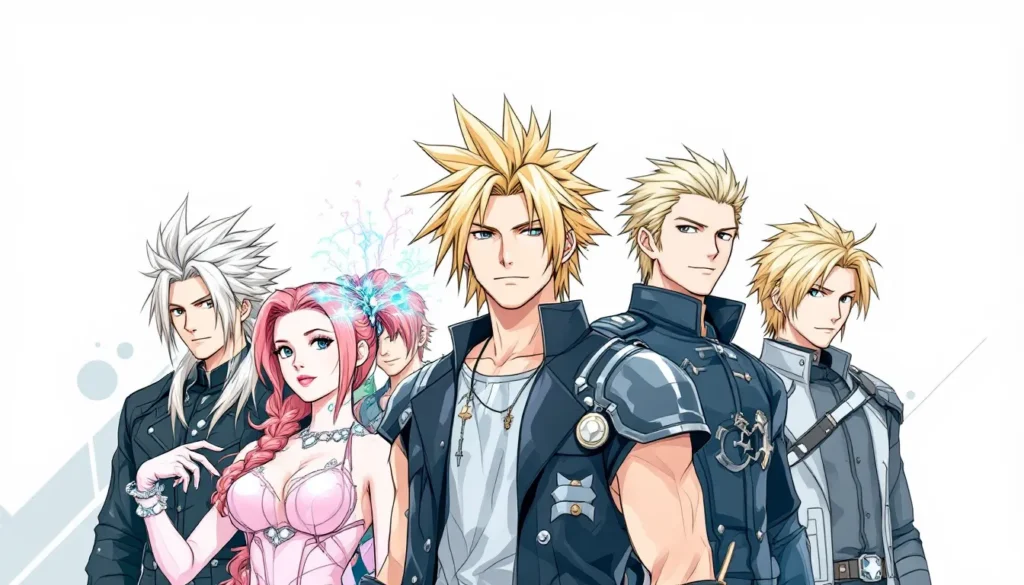
The Final Fantasy franchise has shaped gaming for nearly four decades, and much of its legendary status rests on the shoulders of unforgettable main characters. From the moment Cloud Strife stepped onto the screen in 1997, players have connected with these protagonists on a level that transcends pixels and polygons. Whether you’re revisiting classics on PlayStation, jumping into the latest entries, or experiencing them for the first time, understanding the final fantasy main characters reveals why this series still captivates millions. Each hero brings a distinct narrative arc, combat style, and emotional weight that defines their respective games. These aren’t just avatars you control, they’re fully realized characters whose struggles, motivations, and growth feel earned rather than scripted. This guide covers the most iconic final fantasy protagonists, examining what makes them resonate with players and how their designs influence modern RPG storytelling.
Table of Contents
ToggleKey Takeaways
- Final Fantasy main characters like Cloud, Aerith, Squall, Tidus, and Lightning resonate globally because they grapple with universal emotions—identity crises, loss, emotional trauma, acceptance, and resistance to fate—wrapped in speculative narratives.
- Cloud Strife’s character evolution from reluctant mercenary to vulnerable hero redefined protagonist complexity, proving that internal struggle and psychological depth matter more than superhuman abilities.
- Aerith Gainsborough’s sacrifice in Final Fantasy VII established a narrative template showing that video game storytelling could match cinema’s emotional weight, influencing permadeath mechanics and character sacrifice arcs industry-wide.
- Squall Leonhart’s cold exterior masking deep emotional trauma, combined with his precision-based gunblade combat, created a mechanical and narrative departure from traditional hero archetypes.
- Final Fantasy main characters shaped modern RPG design through their distinct mechanical roles—Cloud’s materia system, Squall’s junction system, Tidus’s speed-focused gameplay, and Lightning’s Paradigm switching—each reflecting their character philosophy.
- These protagonists transcended their original games to become cultural touchstones, with their archetypes influencing entire game industry approaches to character development across JRPGs, action games, and narrative-focused titles.
Cloud Strife: The Ex-SOLDIER Who Defined A Generation
Character Origins and Development
Cloud Strife emerged from Final Fantasy VII as the reluctant eco-terrorist-turned-hero who became gaming‘s poster child for the late ’90s. A former SOLDIER operative from Shinra Electric Power Company, Cloud’s carefully constructed persona masked deeper insecurities and identity confusion. Square crafted him as a blonde, spiky-haired gunblade wielder with a brooding demeanor that resonated with audiences seeking complex protagonists. His early appearances suggested overconfidence, but the narrative masterfully deconstructs this facade to reveal a deeply troubled young man grappling with memory manipulation, existential dread, and survivor’s guilt.
Cloud’s development across Final Fantasy VII spans from mercenary grunt to reluctant savior. He never wanted to be a hero, circumstances forced his hand. This reluctance elevated him beyond typical protagonist tropes. Players gravitated toward his vulnerability alongside his devastating combat potential. By the game’s midpoint, when the twist about his SOLDIER status unfolds, Cloud becomes infinitely more interesting. He’s not a superhuman elite: he’s a regular soldier who’s been chemically enhanced and psychologically fractured. This vulnerability made him human in ways that armored knights and destiny-chosen heroes couldn’t match.
The Remake trilogy brought Cloud into the modern era while deepening his characterization. Director Tetsuya Nomura’s vision expanded Cloud’s internal struggle across the first two Remake titles (2020 and 2024). Rather than simply retelling the original story, the Remake questions reality itself and Cloud’s perception of events. This meta-narrative approach acknowledges that players already know the original while providing fresh psychological depth.
Cloud’s Role Across Final Fantasy Games
Cloud doesn’t exist solely within Final Fantasy VII. His appearances in Crisis Core, Dirge of Cerberus, Dissidia, and most recently in Final Fantasy VII Remake and Rebirth define him across multiple timelines and alternate realities. Each appearance refines his character without overshadowing his core identity.
In Crisis Core: Final Fantasy VII (2007, PSP), players controlled Zack Fair and encountered Cloud as a traumatized infantry soldier. This prequel reversed traditional character introduction, showing Cloud before his legend began. Fans witnessed Cloud’s hero worship of Zack and understood how his trauma became weaponized into combat prowess. When Final Fantasy VII Remake released in 2020 for PS4, it incorporated Crisis Core’s deeper lore, allowing new players to understand Cloud’s fractured psyche without needing previous context.
The Dissidia franchise positioned Cloud as a warrior across multiple worlds. While narratively standalone, these fighting games cemented his status as a gaming icon rather than franchise-specific character. His victory poses, dialogue, and combat style became instantly recognizable to players who’d never touched Final Fantasy VII. By the time Final Fantasy VII Rebirth released in 2024 for PS5, Cloud had transcended his original game to become a cultural touchstone. That level of cultural penetration rarely happens to video game characters, Cloud achieved it through stellar writing combined with iconic design.
Cloud’s gunblade remains central to his identity, though its design evolved significantly. The Remake versions feature more elaborate blade work, incorporating both sword techniques and gun mechanics. His signature Limit Break abilities, specifically Omnislash, became legendary among gamers. The 16-hit finisher represents the ultimate expression of his power, yet even mastering Omnislash can’t overcome the emotional weight Cloud carries.
Aerith Gainsborough: The Last Cetra And Heart Of The Story
Aerith’s Unique Powers and Significance
Aerith Gainsborough stands as Final Fantasy VII’s tragic centerpiece, the flower merchant wielding unparalleled magic and ancient bloodline powers. As the last surviving Cetra (the Planet’s chosen race), Aerith carries the weight of extinction alongside destiny. Her magic-based combat style contrasts sharply with Cloud’s physical aggression, making her essential for team composition and narrative balance.
The Cetra bloodline grants Aerith abilities that transcend typical magic. Her Limit Breaks, particularly Healing Wind and Cosmo Memory, function at a level beyond conventional white magic. She doesn’t just cast spells, she communes with the Planet itself. This mystical connection manifests in abilities that other party members cannot access. Aerith’s presence on the field fundamentally alters how players approach combat. Where Cloud delivers overwhelming offense, Aerith provides salvation. This dynamic created the template for party-based RPG design that influenced countless games since 1997.
Aerith’s story significance extends beyond mechanics. Square positioned her as the narrative’s emotional anchor, yet her journey subverts expectation. Early in Final Fantasy VII, Aerith appears as a potential romantic interest and supporting figure. The narrative structure suggests her as a secondary character. Then her role expands. She becomes the key to humanity’s salvation, the only being capable of communing with the Lifestream and preventing catastrophe. By the game’s climax, Aerith achieves an almost divine status, and the story doesn’t shy away from her sacrifice. Her death remains one of gaming’s most pivotal moments.
Final Fantasy VII Remake expanded Aerith’s characterization significantly. Rather than simply suffering through predetermined events, Remake’s Aerith demonstrates awareness of her own story’s trajectory. She references events that haven’t happened, mourns outcomes she sees approaching, and struggles against narrative inevitability. This version of Aerith becomes someone actively fighting her fate rather than passively accepting it. Such deepening transformed her from tragic sacrifice into complex protagonist.
Legacy and Impact on Final Fantasy Lore
Aerith’s legacy shaped Final Fantasy lore across decades. Her death in the original Final Fantasy VII created a narrative template where player protection can’t prevent loss. Games after 1997 incorporated permadeath implications, character sacrifice arcs, and unexpected emotional turns directly descended from Aerith’s death scene. She proved that video games could deliver storytelling comparable to cinema, not because the graphics were cutting-edge, but because the emotional weight felt earned.
Within Final Fantasy continuity, Aerith’s Cetra lineage connects multiple entries. Final Fantasy X features the Farplane, a concept nearly identical to the Lifestream. Final Fantasy XIII incorporates similar themes of communion with cosmic forces. These narrative echoes demonstrate how thoroughly Aerith’s character shaped franchise direction. Her spiritual connection to the Planet established the mystical framework that subsequent entries would expand upon.
Aerith’s design, the simple pink dress, the flower shop aesthetic, the contrast between civilian appearance and godlike power, became iconic. In discussions of final fantasy main characters across all media, Aerith consistently ranks among the top three most beloved. Her character arc proves that traditional femininity doesn’t preclude complexity or power. She’s neither oversexualized nor stripped of agency: she’s simply written with the depth that Cloud receives, perhaps even more so.
The Final Fantasy VII Remake trilogy’s treatment of Aerith suggests that her story isn’t finished. By reimagining her as someone fighting predestination itself, Square opened avenues for character development that the original game couldn’t explore. Modern players witnessing Aerith’s expanded role report deeper emotional investment than previous generations experienced. That evolutionary approach demonstrates how classic characters remain vital when writers commit to deepening rather than merely preserving them.
Squall Leonhart: The Gunblade-Wielding Reluctant Hero
Squall’s Character Arc in Final Fantasy VIII
Squall Leonhart represents a departure from Cloud’s archetype while retaining the reluctant hero framework. Final Fantasy VIII’s protagonist begins as a cold, disciplined student at Balamb Garden Military Academy, operating under the assumption he’ll never need to save the world. His stoicism masks deep emotional trauma and attachment difficulties, traits that Final Fantasy VIII explores with surprising psychological nuance.
The gunblade, Squall’s signature weapon, stands apart as one of gaming’s most technically interesting melee tools. Unlike Cloud’s gunblade (which remained a sword with gun elements), Squall’s version requires timing and technique. Successfully triggering the gun’s recoil enhances damage, making Squall’s combat style fundamentally about precision and rhythm rather than raw power. This mechanic made Squall feel different to control, not just narratively distinct from Cloud, but mechanically distinct in how players interacted with him.
Squall’s emotional arc centers on his inability to connect with others. Early Final Fantasy VIII positions him as abrasive, dismissive, and deeply isolated. His internal monologues reveal someone self-sabotaging relationships before they can form. When Rinoa Heartilly enters his life, she forces Squall to confront his emotional walls. Unlike traditional romance arcs, Squall doesn’t simply agree to reciprocate feelings, he actively resists, and the story validates his emotional struggle rather than treating his resistance as a character flaw to overcome quickly.
The time travel twist in Final Fantasy VIII’s third act fundamentally reframes Squall’s entire existence. Players discover that Squall’s entire party exists because of actions they haven’t taken yet, actions forced upon them by someone trying to prevent their birth. This paradoxical narrative structure predates modern discussion of time loops by decades. While the execution divides fans, the ambition remains clear. Squall isn’t just learning to be a hero: he’s discovering that his heroism creates causality loops that determine his own origins. That existential weight elevates him beyond adventure narrative into philosophical territory.
Combat Style and Strategic Importance
Squall’s junction system integration makes him tactically fascinating. Where Cloud relies on equipped materia for spell access, Squall’s Guardian Forces (summons) attach directly to his stats. A Guardian Force junctioned to Strength actually increases Squall’s physical damage output, but equipping it for ATK improvement means sacrificing its use for enemy junctions or healing. This trade-off system created genuine strategic depth that required understanding limitations rather than simply stacking powerful options.
In team composition, Squall functions as a physical attacker with excellent durability. His Limit Breaks, particularly Renzokuken, allow massive damage output that scales with player skill (correctly timing the limit break button presses multiplies damage). Final Fantasy VIII never rewards button-mashing: it rewards precision and patience. Squall’s Renzokuken animations can potentially continue for extended sequences if players successfully trigger follow-up attacks, transforming combat into a rhythmic experience rather than turn-based exchange.
Squall’s role within Balamb Garden Academy positions him as exceptional among soldiers. His status as SeeD, the elite mercenary force trained since childhood, explains his competence without requiring hand-waving. When Final Fantasy VIII asks him to save the world, it doesn’t feel narratively nonsensical because the game established that he’s spent his entire life training for exactly such circumstances. Yet Squall’s training never included emotional preparation for leadership or connection. He’s perfectly equipped for combat and completely unprepared for being human. That contradiction creates genuine tension throughout the narrative.
Tidus: The Blitzball Star Who Changed Everything
Tidus’s Journey and Emotional Depth
Tidus arrived in Final Fantasy X (2001, PS2) as something unprecedented, a protagonist who wasn’t stoic, wasn’t traumatized by dark pasts, and actually smiled occasionally. His upbringing as a Blitzball star in the prosperous city of Zanarkand positioned him as an athlete rather than soldier. This fundamental difference shaped how the narrative could treat him. While Cloud and Squall carried baggage, Tidus carried optimism mixed with naïveté, making him vulnerable to the world he discovered.
Tidus’s core character struggle revolves around his unreality. As the game progresses, players gradually discover that Tidus doesn’t actually exist in the conventional sense. He’s a dream, an idealized memory of himself created by the massive whale-like creature Sin. This revelation transforms every moment of his journey retrospectively. His quest to defeat Sin becomes a quest to accept his own nonexistence. Final Fantasy X could have handled this as a depressing revelation, but instead, it frames Tidus’s nonexistence as liberating. He’s given the chance to choose his own ending even though, or perhaps because of, his lack of true existence.
Tidus’s voice acting by James Arnold Taylor brought unprecedented personality to main characters. Fans debated whether his voice was too present, too energetic, too Western. Those criticisms missed the point. Tidus needed to sound youthful and optimistic because his naïveté contrasts with the world’s suffering. His laugh, which players could trigger at certain points, felt uncomfortably human, awkward and genuine rather than anime-esque. That choice made Tidus feel more real than more traditionally stoic protagonists, even though his reality is explicitly questioned.
The relationship between Tidus and Yuna anchors Final Fantasy X’s emotional core. Unlike Cloud’s muddled romantic trajectory or Squall’s resistance to emotion, Tidus openly loves Yuna almost immediately. He’s not afraid of his feelings: he’s afraid of losing her. This shift in character dynamics allowed Final Fantasy X to explore different relationship themes. Where Final Fantasy VII examined trauma’s impact on love, and Final Fantasy VIII examined emotional walls, Final Fantasy X examines love’s powerlessness against fate. Tidus loves Yuna completely and must learn to accept that love cannot save her.
Combat Abilities and Team Synergy
Tidus’s combat role functions as the party’s speed specialist. His physical damage output lags behind other characters at baseline, but his speed allows more turns. This creates a strategic optimization puzzle, do you rely on Tidus’s frequent turns, or allocate growth resources to other party members? Final Fantasy X’s sphere grid system, which allowed players to customize character progression, made Tidus’s role flexible. Some players specialized him into an attacker: others kept him as pure speed, enabling other characters to act more frequently.
His Limit Break, Overdrive, triggers based on damage received, Tidus needs to survive incoming attacks to access his most powerful ability. This risk-reward dynamic matches his character narrative. He’s young and somewhat fragile compared to hardened warriors like Auron, yet he persists through adversity to emerge stronger. The Overdrive ability, particularly his ultimate Blitz King technique, delivers massive multi-hit damage, but players must correctly anticipate when enemies will deal sufficient damage to charge it.
Tidus’s connection to Final Fantasy 14 Dark Knight job design remains indirect but conceptually interesting. Both characters navigate personal nonexistence or darkness. While the Dark Knight job embraces shadowy aesthetics, Tidus’s character arc moves toward accepting painful truths about identity. The parallel isn’t mechanical but thematic, both represent protagonists understanding that they must exist even though lacking traditional validity for existence. Tidus chooses existence anyway. The Dark Knight embraces the darkness as part of identity.
Lightning: Final Fantasy’s Modern Warrior
Lightning’s Evolution Across Multiple Games
Lightning emerged in Final Fantasy XIII (2009, PS3/Xbox 360) as a soldier-turned-fugitive bearing the weight of divine mandate. Her appearance, military garb, confident stance, minimal emotional expression, signaled departure from traditional female protagonist roles. She didn’t exist to support a male lead: she drove the narrative forward as an equal to any character in franchise history. Her name itself, Claire Farron, takes a backseat to her soldier designation. Lightning is her identity, not a nickname.
Final Fantasy XIII’s narrative thrusts Lightning into leadership by necessity rather than choice. Her sister Serah becomes cursed with Focus, a supernatural brand that marks her for sacrifice. Lightning’s entire journey stems from refusing an unjust cosmic destiny. She doesn’t train to become a hero: she becomes one by simply refusing to accept the world’s predetermined horrors. This contrasts with Tidus’s eventual acceptance of fate or Cloud’s traumatic evolution, Lightning fights through the entire story to deny causality itself.
Lightning’s combat evolution across Final Fantasy XIII, XIII-2, and Lightning Returns demonstrates how writers continued developing her. Each game showed different facets of her personality that earlier entries only hinted at. In the original, she’s all iron will and tactical thinking. In the sequel (where she appears supporting other protagonists), she becomes wearier and more philosophical. By Lightning Returns: Final Fantasy XIII (2013), she’s transcended normal human existence, cursed to save a world repeatedly until she accepts her role. Even then, the narrative allows Lightning agency in choosing how her story concludes rather than forcing a specific ending.
Lightning’s design remains iconic. The pink-ribboned ponytail, the gunblade-adjacent weapon called Blazefire Sabre, and the military coat became instantly recognizable. Yet her design never relied on sexualization: it communicated character through functional aesthetics. She dressed for combat, not appeal. This distinction matters because it allowed players to focus on her character rather than distracted by visual presentation. While some criticized her prominence in marketing materials, her actual narrative consistently centered her competence over appearance.
Combat Mechanics and Character Growth
Lightning’s role in Final Fantasy XIII introduced the Paradigm system, which fundamentally changed real-time combat structure. Rather than selecting individual actions, players switched Lightning between Commando (physical attacker), Ravager (magic specialist), and Medic (healer) roles. This system required strategic thinking about threat levels and resource management rather than simply executing optimal rotations.
Lightning’s Commando role centered on physical offense with soldier-like precision. Her weapon, the Blazefire Sabre, combined sword and gun mechanics (echoing Cloud’s gunblade without copying it). Her attack chains incorporated multiple hits that rewarded button timing, making her feel responsive even though being part of an automatic system. Her Limit Break, Army of One, unleashed a devastating combination of attacks that scaled with how successfully players executed preceding abilities.
As a character, Lightning’s growth centered on learning to accept help and recognize her limitations. She begins Final Fantasy XIII convinced she must save Serah alone, that accepting assistance means weakness. Her party gradually teaches her that strength includes vulnerability and interdependence. This character arc subverted the typical “lone hero grows stronger by helping others” formula. Lightning didn’t become stronger by helping others, she became complete by accepting help from them.
Lightning’s journey across three games created one of Final Fantasy’s longest character arcs. Players who experienced Final Fantasy XIII and its sequels witnessed her transformation from soldier to savior to something beyond mortal understanding. By Lightning Returns, she achieved a level of philosophical enlightenment while maintaining her essential character. She remained tactical, driven, and principled, but gained wisdom about acceptance. This progression proved that character development could span games without becoming repetitive or contradictory.
Why These Characters Resonate With Players Worldwide
Final Fantasy protagonists transcend their games through universal emotional themes presented in speculative settings. Cloud’s struggle with identity resonates with anyone questioning who they really are beneath social conditioning. Aerith’s sacrifice connects to our understanding of loss and helplessness. Squall’s emotional walls mirror social anxiety and fear of connection. Tidus’s journey embraces futility as motivating force rather than reason to surrender. Lightning’s refusal to accept unjust fate appeals to anyone struggling against circumstances. These aren’t gaming-specific experiences, they’re human experiences.
The character designs also matter tremendously. Players remember Cloud’s iconic hair, Aerith’s pink dress, Squall’s scar, Tidus’s innocent smile, and Lightning’s military bearing. Visual distinctiveness allows instant character recognition across games, merchandise, and fan communities. When gaming outlets rank Final Fantasy 14 Classes and discuss playstyles, they reference these main characters as aspirational archetypes. Cloud’s Gunbreaker job in Final Fantasy XIV exists partly because players wanted to recapture his gunblade fantasy.
Musical composition elevated these characters significantly. Nobuo Uematsu’s scores, particularly Cloud’s theme (“One-Winged Angel”), became instantly recognizable even to non-gamers. When players hear these themes, they don’t simply remember gameplay moments, they reconnect with the character’s emotional weight. Aerith’s theme carries sadness and grace. Squall’s theme conveys brooding isolation. Tidus’s theme mixes optimism with underlying melancholy. These musical identities made characters memorable beyond visual design.
The writing quality also deserves emphasis. Unlike many games where protagonists deliver exposition, Final Fantasy main characters process emotions and make decisions that feel genuine. They resist simple answers. Cloud questions whether his memories are real. Aerith mourns a death she can’t prevent. Squall struggles to let anyone close emotionally. Tidus must accept he’s not real. Lightning demands better from the universe itself. These aren’t surface-level struggles resolved in cutscenes: they define how characters approach challenges throughout their games.
Gaming journalism and analysis, particularly through outlets like RPG Site, consistently positions these characters alongside literature’s greatest protagonists. This elevation of video game storytelling to comparable status with novels and film happened gradually, but Final Fantasy protagonists accelerated it. Players defended Cloud and Aerith’s characterization with the same critical frameworks typically applied to Shakespeare or contemporary literature. That shift represents massive cultural movement about video game legitimacy.
Modern gaming continues feeling the influence of these characters. Every protagonist who questions their identity echoes Cloud. Every sacrifice character carries weight from Aerith’s death. Every emotionally withdrawn character references Squall’s template. Every young hero thrust into unwanted circumstances borrows from Tidus. Every female action protagonist walks in Lightning’s footsteps. The Final Fantasy main characters didn’t just define their games, they shaped how the entire medium approaches character development.
Conclusion
The main characters of Final Fantasy transcended their original games to become cultural touchstones in gaming. Cloud’s identity crisis, Aerith’s tragic sacrifice, Squall’s emotional awakening, Tidus’s acceptance of unreality, and Lightning’s refusal to accept fate, each represents a different approach to protagonist development. They’re not interchangeable heroes wearing different costumes: they’re fundamentally different people experiencing fundamentally different struggles.
What makes these characters resonate decades after their debut comes down to honest writing about genuine emotions wrapped in speculative narratives. When Cloud discovers his memories might be false, players care because they’ve invested in him as a character. When Aerith approaches her unavoidable death, the tragedy lands because she’s been fully realized, not simply a plot device. When Squall lets Rinoa into his life, it feels monumental because his emotional walls were credible. When Tidus sacrifices himself even though being nonexistent, the meaningfulness derives from his character arc, not cosmic significance. When Lightning demands the universe justify its cruelty, players recognize the refusal to accept injustice.
These characters proved that video game narratives could achieve depth comparable to any medium. They influenced not just subsequent Final Fantasy entries but the entire industry’s approach to protagonist development. Modern JRPGs, action games, and narrative-focused titles continue building on the templates these characters established. Discussions comparing Final Fantasy 14 Patch content changes still reference how these classics handle character evolution.
For players experiencing these characters for the first time through the Remake trilogy or emulation, their impact remains immediate. Cloud’s struggle feels contemporaneous because identity and authenticity remain modern concerns. Aerith’s spiritual connection parallels modern fascination with mysticism and environmental consciousness. Squall’s emotional journey resonates with discussions of mental health and vulnerability. Tidus’s nonexistence echoes contemporary philosophy about meaning-making in absurd universes. Lightning’s rebellion against cosmic injustice speaks to modern activism.
The Final Fantasy main characters endure because they’re simply well-written humans placed in extraordinary circumstances. They succeed or fail based on character, not destiny. Their victories feel earned. Their defeats feel devastating. That humanization, grounded in genuine emotional stakes rather than cosmetic stakes, created gaming’s most memorable protagonists. Whether you first encountered them in 1997 or discovered them in 2024, their stories remain compelling because they prioritize character development over spectacle, growth over perfection, and authenticity over archetype. That’s the real final fantasy, meaningful stories about people learning who they actually are.

