
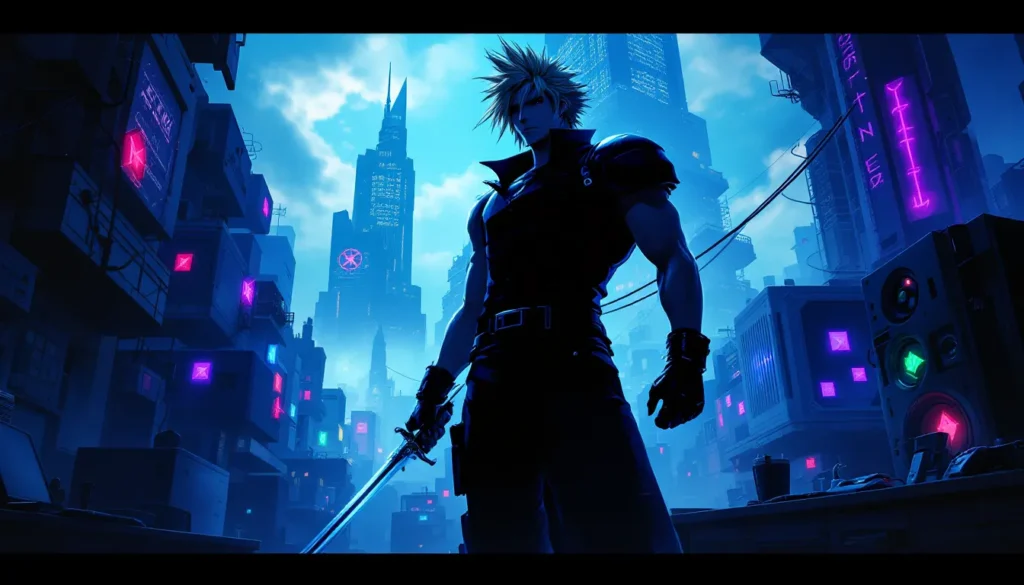
Final Fantasy VII on PS1 stands as one of gaming’s most pivotal moments, a 1997 release that didn’t just define a generation, it reshaped what players expected from role-playing games entirely. Whether you’re a veteran who logged hundreds of hours in Midgar or discovering it for the first time through emulation, modern ports, or the recent remake trilogy, understanding the original is essential to appreciating its impact. The PS1 original remains the definitive version of this story, with its own mechanical depth, pacing, and charm that subsequent releases have built upon. This guide covers everything from mastering the ATB combat system to uncovering every secret the game has to offer, because Final Fantasy VII isn’t just a game worth finishing: it’s one worth understanding completely.
Table of Contents
ToggleKey Takeaways
- Final Fantasy VII PS1 revolutionized RPGs through its innovative Materia system, which allows flexible character customization and multiple viable build strategies without a single ‘correct’ approach.
- The original’s narrative remains exceptional for its psychological depth, willingness to deconstruct its own story, and character development that feels earned rather than forced through cutscene melodrama.
- Optimal leveling strategies vary by game progression—Corel Prison for levels 40-45, Sunken Gelnika for late-game, and Disc 1 money grinding through stealing and selling Ethers.
- Strategic boss preparation combined with Barrier, Haste, and Cure Materia beats raw damage output, while understanding enemy weaknesses and timing Limit Breaks transforms challenging encounters into manageable victories.
- Final Fantasy VII PS1 remains the definitive experience despite modern remakes, best accessed through modded PC emulation for visual enhancements or PCSX2 emulation for authentic purist gameplay.
- The game’s 30-year legacy persists because it combines mechanical innovation, narrative ambition, and emotional resonance—not through nostalgia alone, but through genuinely rewarding and playable mechanics that still outpace many modern RPGs.
Why Final Fantasy VII Remains a Gaming Masterpiece
Story, Characters, and World-Building That Defined a Generation
Cloud Strife’s journey isn’t just a plot, it’s a psychological unraveling wrapped in a globe-trotting adventure. The narrative starts straightforward: your mercenary band opposes the evil Shinra Electric Power Company and its world-consuming energy extraction. But as you progress, the story systematically deconstructs its own premise, exploring identity, agency, and what it means to be a hero. Characters like Aerith, Sephiroth, and Barret aren’t stock RPG archetypes: they’re people with conflicting goals and genuine moral weight.
The world-building remains remarkable for a PS1-era title. Midgar’s vertical slums, where sunlight never reaches the plate above, create immediate economic and social tension. The Gold Saucer feels like an actual amusement park, complete with a functioning casino, rather than a generic dungeon hub. Each environment reflects the impact of Shinra’s reign. This wasn’t just narrative ambition: it was design philosophy.
What makes Final Fantasy VII’s storytelling hold up is its willingness to be weird. Metacritic aggregates critical scores that consistently place the original in the high 80s to low 90s, but those numbers don’t capture why players obsess over it decades later. The game has cross-dressing sequences, superboss monsters that require bizarre item combinations, and a romance subplot that genuinely impacts the story’s emotional core. It feels human in ways modern AAA games often polish away.
The character development across your 40-60 hour journey is structured perfectly. You start with Cloud as a edgelord mercenary, but his unreliable narration gradually becomes apparent. By the midway point, his worldview collapses, and you’re piecing together truth from delusion. Aerith’s subplot, which we won’t spoil, carries weight because the game earned it through genuine party bonding, not cutscene melodrama.
Gameplay Mechanics and the ATB Combat System
Materia System and Character Customization
The Active Time Battle (ATB) system that powered Final Fantasy IV through IX remains strategically satisfying even against modern turn-based RPGs. Unlike purely turn-based systems where everyone gets a guaranteed action, ATB measures character speed and spell-casting time. A quick physical attacker might land three hits before your spell-caster finishes casting a single ability. This creates real tactical moments: do you use Haste to speed up support characters, or Slow to cripple enemy casters?
What separates Final Fantasy VII’s combat from its predecessors is the Materia system, a modular magic and ability framework that defines your entire party. Rather than learning abilities through leveling, you equip Materia gems into armor and weapons. A basic Fire Materia lets anyone cast Fireball, but slot it into a character’s weapon’s double-slot and they gain two independent spell chains. Link Materia like Elemental or Added Effect create combinations that multiply in power: equip Added Effect with Poison, and every physical hit can poison enemies.
This system is beautifully flexible. Cloud can be a pure physical attacker, a spellcaster, a support character, or a hybrid depending on your Materia allocation. There’s no single “correct” build for most content, only efficient ones for speedrunning or optimal ones for maximum power. A player might equip Cloud with Cure Materia to heal, while another keeps him as pure DPS. Both work. The final boss has minimum level requirements, but the game accommodates wildly different power curves.
Character roles blur by design. Aerith is traditionally the healer, but you can turn her into a physical attacker with strong weapon choices and proper Materia. Barret wields a gun-arm that’s slower than Cloud’s sword but hits harder, and his Limit Break abilities have devastating group damage. Red XIII combines decent physical damage with high magic power. The flexibility extends to your entire party composition, though some characters benefit from strategic Materia placement more than others.
Limit Breaks add another layer. Each character accumulates a gauge during combat that triggers special abilities when full. Omnislash (Cloud’s ultimate Limit Break) deals 15 hits of damage scaling with both physical and magical stats. Typhon (Red XIII’s final form) damages all enemies while applying vulnerabilities. These aren’t just damage buttons: they’re party-altering pivots during extended boss fights. The strategy shifts when a character’s Limit Break is available, do you use it now for safety, or bait enemy attacks to maximize its impact?
Essential Tips and Strategies for Players
Leveling, Grinding, and Money Farming Techniques
Final Fantasy VII doesn’t require excessive grinding if you’re playing optimally, but the game heavily rewards preparation. Most boss encounters scale somewhat with your level, but level 50+ characters trivialize late-game content, while level 40 characters face genuine difficulty. Here’s what works:
Efficient Experience Routes:
- The Corel Prison area (Disc 2) yields 2,000+ experience per random encounter, use it when you hit level 40-45.
- The Sunken Gelnika (Disc 3, post-battle-arena) spawns Gi Nattak enemies that grant 7,200 EXP each. This is peak late-game leveling, but requires Underwater Materia first.
- The Junon section offers 1,500+ EXP encounters, perfect for mid-game leveling (levels 25-35).
- Equip EXP Plus Materia to speed grinding significantly, you’ll level 1.5x faster.
Money Grinding:
- Corneo’s Mansion guards (Sector 6) drop Cosmo Memory, which sells for 1,500 Gil each. Spawn them repeatedly by visiting and leaving.
- Emerald Weapon’s arena encounters guarantee high-value enemy drops (up to 64,000 Gil per encounter).
- Morph Materia (obtained in the Forgotten Capital) converts defeated enemies into items. Morphing powerful enemies yields rare equipment and materials worth 10,000+ Gil each.
- Disc 1 is tight on money, steal Ether items and sell them immediately if you need quick cash.
Don’t overlevel early bosses unless you enjoy trivializing story moments. The narrative balance assumes levels 20-25 for Disc 1 finale, 35-40 for Disc 2, and 50-60 for the final bosses.
Boss Battles and How to Prepare
Final Fantasy VII’s boss design ranges from straightforward to devious. Here’s the essential framework:
Early Game Bosses (Disc 1):
- Guard Scorpion: Weak to lightning. Stack Thunder Materia and physical attacks. The boss has a self-destruct phase, if you stagger it with damage, it triggers early with reduced HP, making it easier.
- Aps: Water-based boss vulnerable to lightning and ice. Use Bolt repeatedly: it’s vulnerable to status effects.
- Jenova-BIRTH: High magic defense, focus physical attacks and Limit Breaks. Have Cure Materia equipped on at least two characters.
Mid-Game Bosses (Disc 2):
- Safer Sephiroth (end of Disc 2): This isn’t the final boss, but it’s a skill check. Bring Curaga or Full-Life Materia, and equip Regen to survive multi-target attacks. His Supernova attack hits all party members for significant damage, having high HP pools (3,000+) is mandatory.
- Red Dragon: Casts Trine (random multi-target ice magic). Use Barrier and Haste before engagement. Physical-heavy parties can burst it down quickly.
Late Game/Optional Bosses:
- Emerald Weapon: Requires high-level characters (58-60+) and strong equipment. Use Underwater Materia on the player controlling the submarine. One-Hit Kill abilities don’t work: focus sustained DPS with Haste and Barrier.
- Ruby Weapon: AI-controlled enemies spawn during the fight. Use Time Materia (Slow, Stop, or Gravity) to manage them. This fight requires mechanical mastery, not just level advantage.
- Ultimate Weapon (Stronger Boss): Requires proper Limit Break setup and status immunity. Equip Seal and protect against Paralysis.
Universal Boss Prep:
- Always carry Full Heal Materia or Full-Life for emergencies.
- Poison is underrated, equipping it prevents some boss AoE attacks from hitting full power.
- Barrier and Haste on your party always beats raw damage output against extended fights.
- Save before every boss and experiment. The game’s flexibility rewards testing different strategies.
Hidden Content and Secrets Worth Discovering
Ultimate Weapon Locations and Requirements
Each playable character can obtain an ultimate weapon, powerful equipment that ranks among the game’s best. Finding them requires exploration, puzzle-solving, or defeating hidden bosses:
Cloud’s Omnislash (Ultimate Limit Break):
Not an equipment piece, but his ultimate Limit Break ability. Obtain it by finding all four Level 4 Limit Break manuals:
- Manual 1: Defeat Emerald Weapon, obtain the Earth Key from its corpse.
- Manual 2: Treasure in the Sunken Gelnika (underwater plane, Disc 3).
- Manual 3: Located in the Northern Crater’s depths.
- Manual 4: Defeat Ultimate Weapon (the flying boss), then access its cave.
Aerith’s Premium Heart (Ultimate Weapon):
Found in the Forgotten Capital. After obtaining the Black Materia, explore the area thoroughly to find treasure chests containing rare equipment. You must access this before advancing past a certain story point or you’ll miss it permanently.
Barret’s Catastrophe (Ultimate Weapon):
In the Rocket Village (Disc 2). After the story event concludes, return and search the area. It’s hidden in a chest requiring basic puzzle-solving with switches.
Red XIII’s Cosmo Weapon:
Found in the Cosmo Cavern (accessible Disc 2 onward). Requires progressing through an optional dungeon with high-level enemies. Only one of these weapons exists per playthrough, so choose carefully which character equips it first.
Tifa’s Premium Heart:
Obtainable in the Nibelheim Mansion through a puzzle sequence. The mansion contains a safe with a combination lock, the hint is provided within the mansion itself. Solve it and claim her ultimate weapon.
Bonus Content and Post-Game Activities
Final Fantasy VII’s post-game activities extend playtime significantly:
Superbosses (Optional Encounters):
- Emerald Weapon: A green underwater creature requiring the submarine. Defeat it to obtain 1 million Gil and rare Materia (Master Summon, Master Command).
- Ultimate Weapon: A flying boss accessible after a certain point. Defeating it grants powerful equipment and adds a crater-based dungeon.
- Ruby Weapon: A hidden desert boss (post-game) with devastating AI-controlled summons. Requires careful strategy and high-level characters (55-60+).
Gold Saucer Activities:
- Chocobo breeding: Capture wild chocobos and breed them to access different colored variants, each opening new world areas. Gold, Green, Black, and White chocobos each unlock unique dungeons or shortcuts.
- High-stakes gambling: The casino offers real item rewards, including rare Materia and weapons, though it’s entirely optional.
- Weapon Trials (Battle Arena): Tournament-style combat against increasingly difficult enemy teams. Rewards include cash and rare items.
Rare Materia Hunts:
- Master Materia: Only obtainable by mastering all Materia in a specific category. Requires grinding and significant time investment.
- Neo-Bahamut, Typhon, Alexander: Powerful summons found in optional dungeons or through specific NPC interactions.
- Time Materia: Haste, Slow, Stop, and Gravity spells unlock powerful utility in boss fights.
Achievement-Style Completionism:
- Obtain all weapons for all characters.
- Master every Limit Break for every party member (requires using them repeatedly in combat).
- Collect all 16 Final Fantasy VII weapons available through synthesis or treasure hunting.
- Breed ultimate chocobo variants to access every hidden area.
Technical Performance and Emulation on Modern Systems
Playing on Original Hardware Versus PC and Emulators
Final Fantasy VII on PS1 still plays smoothly on original hardware, PS1 consoles are affordable used, games are available, and the experience is authentic. But, several modern options exist:
Original PlayStation (PS1 Hardware):
- Pros: Authentic experience, no compatibility issues, physical media feels retro-genuine.
- Cons: Graphics are pixelated by modern standards (the intentional PS1 aesthetic), load times between areas are noticeable (15-30 seconds), and PS1 discs degrade over time.
- The PS1 version runs at 320×224 internal resolution with chunky character models. It’s nostalgic rather than visually impressive now.
PlayStation Network (PS3/PS Vita/PS5 Backwards Compatibility):
- Pros: Legitimately official and maintains original experience, available through Push Square’s verified PlayStation stores for console recommendations.
- Cons: Not available on PS4 or later systems through normal purchasing (though PS Plus Premium added the PS1 classic in 2022 in select regions).
- This is the “official” modern console option if available in your region, though availability remains inconsistent.
PC Versions:
- Final Fantasy VII Original (Steam/PC Ports): Released on Steam in 2012, this is the PS1 version emulated in a software layer. Pros include modding support and full compatibility with Japanese gaming announcements from Gematsu about updates, though the official PC release was discontinued (it’s still purchasable through legitimate resellers). The modding community created incredible texture packs, upscaled graphics, and quality-of-life mods that dramatically improve visuals without changing core gameplay.
- PS1 Original on PC Emulator (PCSX2): Free open-source emulator that runs the PS1 disc flawlessly at 1080p or higher resolution with custom graphics rendering. Completely legal if you own the original disc, though requires technical setup.
Key Performance Notes:
- PS1 version and original emulation maintain pixel-perfect authenticity, zero frame drops, zero performance differences. Load times are historically slow but intentional design.
- Modded PC versions with upscaled graphics and updated textures don’t change core gameplay but look dramatically better. Character models upscale from 1,500-3,000 polygons to millions with community-created models.
- Frame rate remains capped at 60fps on all versions (PS1 runs at 60fps internally, though the actual playback was interpolated).
The Remake Series (2020, Rebirth, etc.):
Final Fantasy VII Remake (PS4/PS5) reimagines the story with modern graphics and real-time combat, while Final Fantasy VII Rebirth (PS5) continues the narrative. Both are exceptional games but represent completely different design philosophies. If you want the authentic experience, stick with the original PS1 version through any of the methods above. The Remake trilogy is a separate (excellent) experience, not a replacement.
Honest Assessment:
For newcomers, the PC version with community graphics mods (available through established mod managers) offers the best visual presentation while maintaining the original experience. For purists, original PS1 hardware or PCSX2 emulation ensures zero compromises. The final fantasy vii steam release remains the most accessible official option, even though being delisted from official stores.
The Legacy of Final Fantasy VII and Its Cultural Impact
From Remake to Recent Sequels: How the Original Still Matters
Final Fantasy VII became the franchise’s most recognizable entry partly through circumstance (it was the first FF game on PlayStation, when the PS1 was ascending) and partly through genuine excellence. That circumstance launched an entire universe: the Compilation of Final Fantasy VII, including Crisis Core, Dirge of Cerberus, and supplementary novels that expanded the world.
The 2020 Remake brought Final Fantasy VII back to modern consciousness, but it’s fundamentally a different game. Remake takes Disc 1’s single city section and expands it into a 40-hour narrative with real-time combat, character depth the original couldn’t achieve with PS1 technology, and deliberate narrative subversions (the game plays with player expectations about which story beats are inviolable). Final Fantasy VII Rebirth (2024) continues this narrative experiment, creating something original rather than purely faithful.
Yet the original PS1 version remains essential because it’s the source material, the reference point all sequels measure against. The Remake’s narrative weight depends on players understanding what the original achieved. Aerith’s arc, Sephiroth’s villainy, the ending’s ambiguity, all resonate because the original established them. The 30-year-old game still outpaces many modern RPGs in thematic complexity and character work.
Why does Final Fantasy VII persist in gaming culture? A few factors:
Mechanical Innovation: The Materia system was genuinely novel in 1997 and remained flexible enough that subsequent games (Crisis Core, the Remake) directly adapted it.
Narrative Ambition: The game attempted philosophical themes (identity, the nature of memories, environmental destruction, corporate overreach) that mainstream games avoided. It was weird and earnest simultaneously.
Cultural Moment: The PS1 was ascendant, 3D gaming was revolutionary, and Final Fantasy VII arrived as the system’s killer app. Perfect timing meets perfect execution.
Emotional Resonance: The story’s emotional beats land because the game earned them. You spend 60 hours with these characters. The narrative payoff feels deserved.
The Remake trilogy won’t replace the original, they’re designed as spiritual successors, not straightforward remakes. This guarantees the PS1 original remains relevant: it’s the root text, the foundation that made everything after possible. New players discovering it now experience something that hasn’t aged perfectly (graphics are dated), but remains mechanically satisfying, narratively engaging, and thematically rich. That’s remarkable for any 30-year-old game.
Conclusion
Final Fantasy VII on PS1 endures because it’s genuinely good, not just historically important, but actually playable and rewarding right now. The Materia system offers genuine build flexibility, the story delivers emotional weight, and the world-building creates genuine atmosphere even though PS1-era technical limitations.
Whether you’re approaching it fresh through modern emulation or revisiting the original discs, the experience remains intact: a 60-hour journey through one of gaming’s most realized worlds, with characters whose arcs matter, bosses that demand strategy, and secrets that reward exploration. The mechanics haven’t been optimized away. The narrative hasn’t been simplified for broader appeal. It’s still weird, ambitious, and deeply human.
The original PS1 version stands as the definitive experience precisely because it’s the original, direct, unfiltered, and uncompromised. Everything after it borrows from its foundation. That’s not nostalgia. That’s legacy.

