
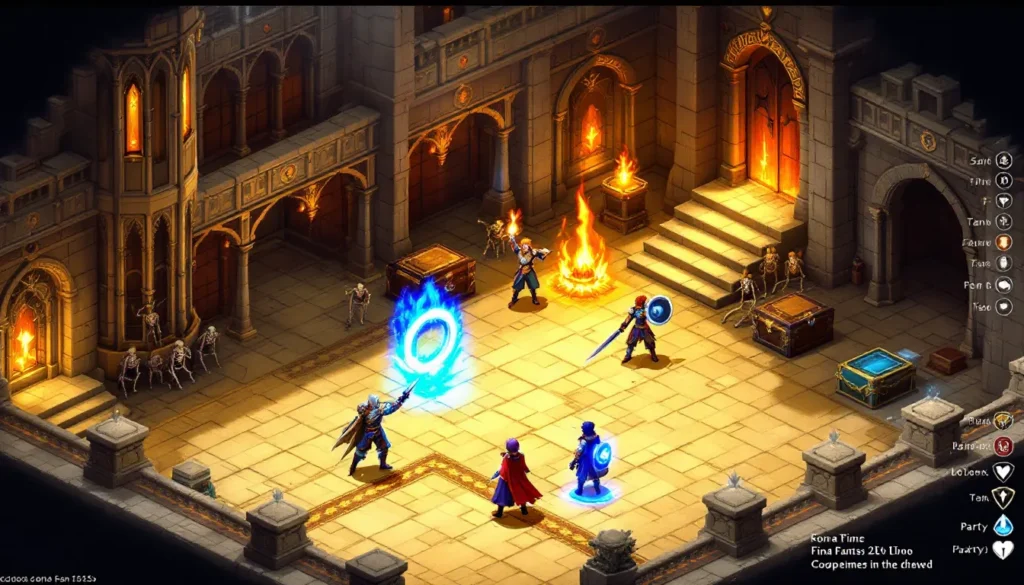
Final Fantasy Crystal Chronicles: Echoes of Time is one of those games that slipped past most gamers’ radars, even though being a solid entry in the Crystal Chronicles spin-off franchise. Released initially for Nintendo DS in 2009 and later ported to Wii, this action-RPG hybrid never quite achieved the recognition of its console siblings, but it’s got something special brewing beneath the surface. If you’re curious about exploring a Final Fantasy title that’s genuinely different from the mainline formula, or you’re hunting for a cozy cooperative experience that still holds up today, Echoes of Time deserves your attention. This guide breaks down everything you need to know about the game, from its real-time combat and character progression systems to where you can actually play it in 2026.
Table of Contents
ToggleKey Takeaways
- Final Fantasy Crystal Chronicles: Echoes of Time is a portable action-RPG hybrid with real-time combat and cooperative multiplayer that holds up well today despite being overlooked at release.
- The Ring Magic system allows strategic flexibility by equipping up to four rings during combat, creating miniaturized spell-selection with genuine risk-reward tension between offense and defense.
- Character progression rewards manual stat allocation and specialization, enabling distinct playstyles from tank-focused Lilties to magic-heavy Yukes without automatic leveling systems.
- Multiplayer cooperation is the intended experience where coordinated party builds—tanks for aggro management, healers for support, and DPS for burst damage—significantly outperform uncoordinated groups.
- In 2026, the game is accessible primarily through emulation via DeSmuME for DS or Dolphin for Wii, with original cartridges and consoles available on secondary markets but costly.
- Echoes of Time delivers satisfying dungeon-crawling progression and engaging challenge curves without demanding excessive time investment, making it ideal for players seeking retro JRPG experiences with meaningful cooperative gameplay.
What Is Final Fantasy Crystal Chronicles: Echoes Of Time?
Game Overview And Platform History
Final Fantasy Crystal Chronicles: Echoes of Time dropped in 2009 as a Nintendo DS exclusive, developed by Square Enix with a straightforward pitch: a portable dungeon crawler with real-time combat and cooperative multiplayer via local wireless. The DS version could be played solo or with up to four players on a single screen, making it one of the more accessible dungeon crawlers on the handheld. A Wii port arrived later that same year, offering enhanced graphics and the option to play with a friend using additional controllers, though it lost some of the portability charm.
The game sits in an interesting middle ground. It’s not as narrative-heavy as Final Fantasy XIV’s sprawling storyline, nor as mechanically deep as traditional mainline titles. Instead, it leans into action-RPG territory with a focus on real-time combat loops and cooperative progression. Think less epic world-saving saga, more satisfying adventure through monster-filled dungeons with friends.
Why This Spin-Off Stands Out From Mainline Titles
While Final Fantasy 14 operates as a massive MMORPG with vertical progression and endgame raids, Echoes of Time embraces a completely different philosophy. It’s designed as a digestible, bite-sized experience where you can pick it up for 20 minutes or dedicate hours to grinding dungeons. The game doesn’t demand the time commitment of an MMO or the 50+ hour single-player campaign of mainline RPGs.
The spin-off nature also freed the developers from adhering strictly to Final Fantasy conventions. You won’t find the Crystals that define other Crystal Chronicles entries, nor the job system associated with core FF games. Instead, Echoes of Time creates its own identity through accessible combat and an emphasis on shared progression with other players. It’s Final Fantasy filtered through a dungeon-crawler lens, which sounds niche but feels refreshing for players burned out on traditional JRPG pacing.
Gameplay Mechanics And Combat System
Core Real-Time Battle System
Echoes of Time ditches turn-based combat entirely in favor of real-time action. Each character has a melee attack tied to a button press, which auto-combos into a three-hit chain. Holding the attack button triggers a charged slash with different knockback properties, essential for crowd control when you’re swarmed by mobs. Movement is fluid and responsive, with dodge-rolling as your primary defensive tool. Timing your rolls to avoid incoming attacks is where skill expression really shines, especially in later dungeons where enemies hit harder and faster.
The pacing feels snappy. Encounters rarely drag on, and boss fights demand active participation rather than menu optimization. You can’t hide behind AI companions or tank-and-spank mechanics. Every hit counts, and spacing matters. This directness appeals to players who want their RPG combat to have some teeth without the complexity of a full action game like Devil May Cry.
Ring Magic And Spell Mechanics
Here’s where Echoes of Time gets clever: the Ring Magic system. Instead of equipping traditional spells, you slot magic rings into your loadout. These rings act as usable items during combat, hit the action button, and you cast whatever spell that ring contains. Range from healing potions to elemental blasts to status debuffs. You can equip up to four rings simultaneously, creating a miniaturized spell-selection system on the fly.
The genius is in the risk-reward tension. Casting a spell leaves you briefly vulnerable, so you can’t spam heals or damage spells without exposing yourself. Bosses punish careless casting, forcing players to weave spellwork between melee combos. Different rings scale with different stats, Intelligence for damage rings, Vitality for healing, so building your character around specific rings creates real strategic variety.
Ring drop rates from enemies feel fair, and you’ll gradually build a collection of useful options. There’s no gacha frustration here, just steady progression as you unlock more versatile tools.
Cooperative Multiplayer Features
The multiplayer is where Echoes of Time truly shines. On DS, you connected locally via wireless and could tackle dungeons with up to three friends. The Wii version supports split-screen for two players, which changes the camera perspective and scaling but maintains the core experience. Playing solo is entirely viable, the game scales encounter difficulty, but the intended experience is social.
Cooperative dungeons reward coordination. A healer ring-wielder pairs well with a character built for pure damage output. Tank-style builds that draw aggro work perfectly when allies focus fire on weakened enemies. There’s no formal party system, just roles that emerge organically from ring choices and stat distribution. Communication matters, especially in group-boss encounters where staggering attacks and managing crowd control becomes crucial for survival.
Progress is shared within a party. Loot drops are distributed fairly, and experience gains aren’t diminished by playing with others, an excellent design choice that ensures grouping is always rewarding.
Character Classes And Job System
Available Classes And Their Strengths
Echoes of Time offers several playable races, each with distinct stat distributions and innate abilities. The Clavat is the all-rounder, balanced attack and defense with respectable magic potential. They’re an excellent choice for solo players or anyone unsure of their preferred playstyle. The Selkie trades defense for raw speed and evasion, letting you hit-and-run enemies before they can react. They’re squishier but rewarding for skilled players who can leverage mobility.
The Lilty is your tank archetype. Higher defense and health pools mean you can absorb punishment while allies deal damage. Building a Lilty with tanking rings creates a legitimate role that makes multiplayer dungeons substantially easier. The Yukes lean heavily into magic, with Intelligence bonuses that amplify ring damage and healing potency. If you’re running support, a Yuke healer outclasses other races significantly.
Each race also has unique animations and flavor text that fit Final Fantasy’s aesthetic, though mechanical differences matter far more than cosmetics. You’re not locked into a class choice, so experimenting with different races in lower-tier dungeons is risk-free and encouraged.
Customization And Progression Options
Progression is surprisingly deep for a handheld dungeon crawler. As you level, you allocate stat points manually into Attack, Defense, Magic, and special attributes. This isn’t an automatic leveling system, you’re building your character’s growth curve. Min-maxing for specific ring builds is viable. Want a pure Intelligence Yuke healer? Stack Magic and dump physical stats. Prefer a physical Lilty tank? Shift points toward Vitality and Defense instead.
Gear progression complements ring loadouts. Armor pieces grant stat bonuses and occasionally unlock new ability slots or ring capacity. Weapons scale with your Attack stat, so your melee auto-attack remains relevant even in late-game dungeons. Finding rare armor drops provides tangible power spikes, and the grind to collect full sets keeps endgame players engaged.
There’s no respeccing system, which means character decisions stick with you. It’s old-school design, but it encourages thoughtful planning and makes your progression path feel personal rather than optimized-by-wiki. Alts are encouraged because exploring different stat distributions is genuinely fun.
Storyline, World, And Atmosphere
Narrative Structure And Plot
Echoes of Time’s story centers on a mysterious tower that appeared in the world, bringing chaos and corrupted monsters in its wake. Your character joins a guild dedicated to investigating the tower and stopping whatever’s causing the disturbance. The plot unfolds through dungeon progression, complete a floor, unlock story dialogue, rinse and repeat. It’s straightforward and doesn’t demand deep narrative investment, which actually works in the game’s favor for a portable title.
NPC companions are present but feel more like quest-givers than party members. They provide context for why you’re venturing into specific dungeons but don’t join your combat roster or get development arcs like mainline FF protagonists. The narrative exists to justify progression rather than tell a complex story, which means you’re never distracted from the core gameplay loop by lengthy cutscenes.
The tone is light and adventurous, no existential crises or world-ending stakes here. It feels like a traditional dungeon-crawling adventure that could’ve existed in the 16-bit era. That simplicity is refreshing given how narratively heavy modern games have become.
Dungeon Design And Exploration
Dungeons are the real stars. Each floor is a contained arena designed for multiple players to navigate simultaneously. Layouts aren’t massive, you’re not spending 30 minutes searching for a single exit, but they encourage exploration. Hidden treasure chests reward thorough investigation, and secret passages occasionally shortcut you past tougher encounters or lead to mini-bosses with rare drops.
The tower structure means progression feels linear but satisfying. Beat a boss, unlock the next floor, tackle harder encounters with better gear and higher levels. There’s a satisfying power-curve as you transition from struggling against early mobs to steamrolling through mid-game dungeons. Later floors introduce environmental hazards and enemy variety that demand tactical thinking beyond “spam Attack button.”
Aesthetically, dungeons maintain Final Fantasy’s visual identity while adapting to the hardware. The Wii version looks noticeably sharper than the DS original, with better textures and character models. Both versions use a top-down perspective that keeps action legible and doesn’t obscure enemy tells. Camera control isn’t necessary, the fixed view handles positioning automatically, letting you focus entirely on combat.
Essential Tips And Strategies For Success
Early-Game Progression And Beginner Tips
Start by experimenting with your chosen race in the first few dungeons. You won’t find the “best” build immediately, and early floors forgive mistakes. Don’t hoard rare rings early-game, use them and learn what playstyles suit you. You’ll find duplicates, and experimenting teaches you more than theorycrafting.
Focus on leveling first, gear second. A level 15 character with basic equipment outperforms a level 10 with the rarest drops. Grind dungeons you’ve already beaten if progression feels slow. Experience rewards scale with floor difficulty, so repeating mid-tier dungeons is often more efficient than struggling through underleveled story content.
Ring management is crucial. Carry healing rings even if you’re not a dedicated healer, having access to potent heals when your dedicated support falls in a multiplayer run is invaluable. Balance offensive and defensive rings. A character with four pure-damage rings will struggle when enemies start hitting harder because you can’t sustain yourself.
When playing multiplayer, coordinate before diving into a tough dungeon. Discuss ring loadouts and stat distributions. A party of four random builds will clear content slower than four coordinated players with complementary roles. Communication doesn’t require voice chat, a quick “I’m healing, you focus damage” works perfectly.
Optimal Builds And Loadout Strategies
For solo play, a hybrid Clavat or Selkie works best. You need survivability and damage output in equal measure because you’re handling everything alone. Equip at least one healing ring and layer in damage rings based on your equipped weapon’s scaling. This balanced approach lets you adapt to unexpected difficulty spikes.
Multiplayer demands specialization. Tank Lilties should maximize Vitality and Defense, equip tanking rings that increase aggro, and learn enemy patterns to avoid devastating hits. Healers (ideally Yukes) stack Magic for potent healing output, carry multiple healing rings, and position themselves away from front-line action. Damage dealers can min-max Attack and Magic, focusing ring builds around their weapon’s primary stat. Supports bring utility rings, buffs, debuffs, crowd-control options that enable allies.
Here’s a concrete tank build: Lilty, 40 Vitality/35 Defense/15 Attack/10 Magic. Equip armor prioritizing Defense bonuses. Ring loadout: Shield Ward (damage reduction), Might (damage boost to taunted enemies), Heal (self-sustain), Cure (group healing for emergencies). This setup lets the tank absorb punishment while keeping themselves and nearby allies alive. Damage dealers focus fire on taunted enemies while the tank holds aggro.
For a DPS build on a Selkie: 30 Attack/20 Magic/15 Defense/20 Speed. Prioritize Attack-scaling armor. Equip Thunder or Fire rings for elemental damage, Might to amplify auto-attacks, Blizzard for crowd control, and Heal for personal sustain. Mobility from the Selkie race means you can position aggressively and disengage before counter-attacks land. The magic rings let you chain spell-casts between melee combos without fully committing to pure physical DPS.
Where To Play And Accessibility In 2026
Available Platforms And Emulation Options
Echoes of Time remains officially available on Nintendo DS and Wii, though finding physical copies costs premium prices on secondary markets. The DS version runs on original hardware and DS Lite systems, making it genuinely portable even though its age. The Wii version requires a Wii or Wii U console, both discontinued but still obtainable.
Emulation is the practical option for most modern gamers in 2026. DeSmuME handles DS emulation with impressive accuracy, supporting wireless multiplayer through network synchronization. You’ll need the ROM file (sourced legally through your own cartridge dump) and controller setup, but once configured, it runs flawlessly on any PC or even weak systems.
Wii emulation via Dolphin offers the most refined experience. The Wii version’s improved graphics shine through emulation, and Dolphin supports up to four controllers simultaneously. Graphics enhancement mods exist in the community, pushing the original visuals beyond what the hardware could achieve. Netplay functionality enables online multiplayer, which is crucial since local wireless on original Wii hardware is practically extinct in 2026.
If you’re hunting for legitimate ownership, DS cartridges run $30-50 depending on condition, while Wii copies hover around $25-40. Factoring in the console costs (used Wii systems start around $50), emulation becomes an economical choice. The game isn’t available digitally on any modern platform, so these are your only avenues unless you discover a surprise 2026 re-release, which seems unlikely given the franchise’s current focus.
For perspective on ongoing Final Fantasy accessibility, Final Fantasy 14 continues receiving updates and ports to new platforms, but older spin-offs like Echoes of Time exist in preservation limbo. Community-maintained emulation is genuinely the best way to experience the game today.
Conclusion
Final Fantasy Crystal Chronicles: Echoes of Time won’t revolutionize your gaming taste, and it won’t satisfy players looking for deep narrative or cutting-edge mechanics. What it offers instead is honest, well-designed dungeon-crawling gameplay that rewards skilled play and cooperative teamwork. It’s a game that respects your time, delivers consistent challenge curves, and gives you tangible reasons to keep pushing forward.
For fans of retro JRPGs or anyone curious about Final Fantasy’s experimental era, Echoes of Time is absolutely worth experiencing. The real-time combat is engaging without demanding fighting-game precision. The ring magic system creates genuine strategic depth. Multiplayer cooperation actually matters rather than feeling like a social checkbox. And honestly, there’s something special about a game that doesn’t demand 100 hours of your life while still delivering satisfying progression and challenge.
Grab an emulator, coordinate with friends for some couch co-op, and rediscover this forgotten gem. You might be surprised how well it holds up.

