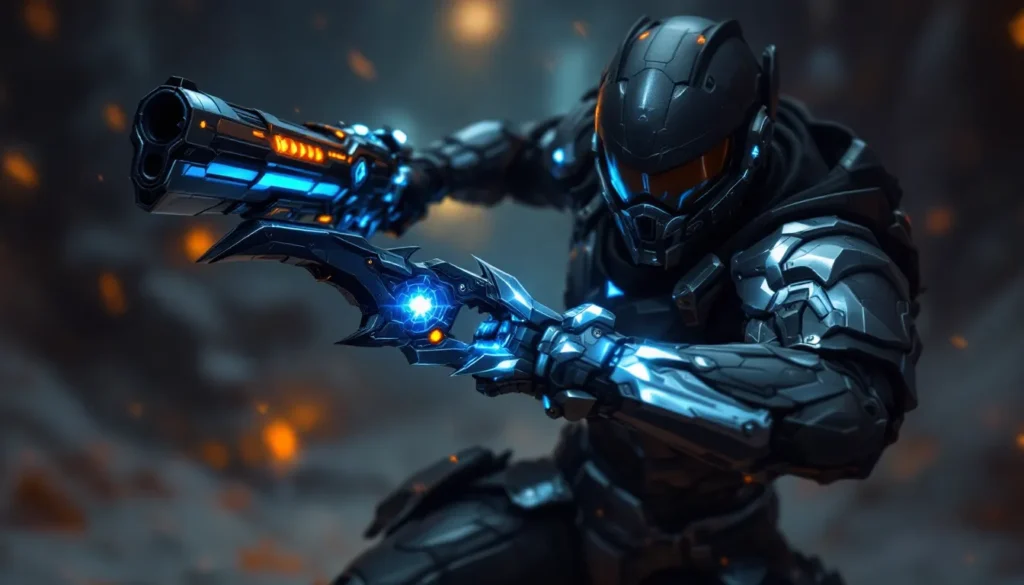
The gunblade is far more than just another weapon in the Final Fantasy universe, it’s an icon that bridges the gap between sword-and-sorcery fantasy and futuristic sci-fi design. Whether you’re wielding it as Squall Leonhart in the beloved classic or unleashing its power as a Gunbreaker in Final Fantasy XIV’s ever-evolving endgame, the gunblade represents a unique blend of melee combat and ranged mechanics that’s captivated players for nearly three decades. This guide dives deep into everything you need to know about gunblades: their storied history, their modern implementation in FFXIV, expert combat strategies, and why they’ve become one of gaming’s most iconic weapons. From casual playthroughs to hardcore raid optimization, we’ll cover the mechanics, gear paths, and mindset shifts that separate average gunbreaker players from those who truly master this weapon.
Table of Contents
ToggleKey Takeaways
- The gunblade evolved from Squall Leonhart’s iconic weapon in Final Fantasy VIII (1999) to the Gunbreaker tank job in Final Fantasy XIV, bridging 27 years of gaming history and design innovation.
- Mastering the Final Fantasy gunblade in FFXIV requires precise rotation management, Cartridge spending optimization under No Mercy windows, and flawless cooldown sequencing to separate average players from top-tier performers.
- Endgame Gunbreaker optimization prioritizes Weapon Damage and Strength as primary stats, with Critical Hit and Direct Hit synergy crucial for maximizing DPS output in current raid tiers.
- The Gunbreaker job combines aggressive damage rotations with defensive resource management, requiring players to actively contribute DPS while timing mitigation abilities—a playstyle that appeals to skilled, competitive tank players.
- Gunbreaker’s popularity stems from its mechanical depth and aggressive identity: unlike passive tank roles in other games, players actively manage burst windows and make split-second decisions that directly impact raid performance.
- The gunblade’s quarter-century legacy demonstrates that iconic weapon design transcends individual games, influencing modern hybrid weapon systems and proving that great form and function remain culturally relevant across gaming generations.
What Is The Gunblade? History and Origins
The Gunblade in Final Fantasy VIII
The gunblade first burst onto the scene in Final Fantasy VIII (1999) as Squall Leonhart’s signature weapon, and it immediately set itself apart. Unlike traditional swords, the gunblade combined a blade with a revolver mechanism, firing a gunshot that triggered the weapon’s special abilities and enhanced its damage output. This wasn’t just aesthetic flair: it was mechanically significant. The revolver’s cylinder had to be “loaded” to enable Lion Heart (Squall’s ultimate Limit Break), and managing ammunition became part of endgame optimization.
In FFVIII, the gunblade’s design philosophy centered on versatility. Squall could switch between different gunblade models by upgrading his weapon through Balamb Garden’s weapon upgrade system. Materials, ammunition, and rare components determined which gunblade he could equip, making progression feel tangible and rewarding. The weapon’s damage calculations factored in Squall’s junction system bonuses, his proficiency with the weapon, and the gunblade’s inherent power, creating layers of customization that defined FFVIII’s depth.
Evolution Across the Final Fantasy Series
After FFVIII’s cultural impact, the gunblade didn’t disappear, it evolved. Final Fantasy XV briefly featured elements of gunblade-inspired design in weapon mechanics, though not as a primary weapon. The gunblade’s true renaissance came with Final Fantasy XIV’s introduction of the Gunbreaker job in Shadowbringers (2019), which reimagined the weapon for a modern MMO context.
Unlike Squall’s single gunblade, FFXIV’s Gunbreaker wields a gunblade as both a melee weapon and a casting carry out. The weapon fires in combat sequences, creating distinctive visual effects and triggering ability rotations that feel explosive and responsive. This evolution made the gunblade a tank weapon rather than a DPS tool, completely reimagining its role in Final Fantasy lore. External sites like RPG Site have covered the evolution of Final Fantasy weapons extensively, showing how the gunblade’s transformation reflects broader trends in JRPG design. Other entries in the FF franchise, including mentions in Dissidia, Crisis Core, and various Compilation of Final Fantasy VII materials, have referenced gunblade-adjacent weapons, but FFXIV’s interpretation stands as the most mechanically significant modern expression of the concept.
Gunblade in Final Fantasy XIV: Complete Overview
Gunbreaker Job Mechanics and Abilities
The Gunbreaker is FFXIV’s unique tank job, introduced in Shadowbringers (Patch 5.0) and continuously refined through patches 6.0-6.55 and into Endwalker and Dawntrail expansions. Unlike the Paladin, Warrior, and Dark Knight, Gunbreaker’s identity revolves around short-burst windows and aggressive resource management.
The core mechanic is the Powder Gauge, which fills through offensive abilities. You spend Powder to execute combo finishers that grant Cartridges, up to three can be stored. These Cartridges fuel your most powerful attacks: Gnashing Fang (15-second cooldown), a three-hit combo that’s the foundation of your DPS rotation. Building and spending Cartridges correctly separates competent Gunbreakers from optimized ones.
Key offensive abilities include:
- Keeper’s Combo (1-2-3 combo generating Powder and Cartridges)
- No Mercy (60-second cooldown: buffs outgoing damage and Cartridge generation)
- Bloodfest (120-second cooldown: instantly grants 3 Cartridges)
- Double Down (60-second cooldown: high potency finisher requiring 2 Cartridges)
- Sonic Break (60-second cooldown: applies a vulnerability debuff to enemies)
Defensive abilities are equally critical. Aurora provides a shield to yourself or allies, Camouflage reduces damage taken and increases parry rate, and Superbolide (120-second cooldown) grants near-invulnerability at the cost of leaving you at 1 HP, a powerful survival tool when timed correctly. Heart of Stone shields you or a party member and reduces incoming damage, making it your most flexible defensive CD.
The Gunbreaker job combines aggression with survivability in a way that rewards precise timing and rotation awareness. You’re not just mitigating, you’re actively contributing to damage while managing defensive resources.
Stat Priorities and Gear Optimization
For endgame Gunbreaker play, stat priority follows a clear hierarchy:
- Weapon Damage (found only on weapons: non-negotiable primary stat)
- Strength (main stat for Gunbreaker, increases tank defense and damage)
- Critical Hit (increases chance to land critical hits: stacks multiplicatively with Direct Hit)
- Direct Hit (increases critical hit damage and direct hit rate)
- Determination (flat damage and healing increase: universal for all roles)
- Tenacity (increases tank defense and damage: less critical than Crit/DH but still valuable)
Vitality is provided by gear automatically and doesn’t require deliberate optimization. As of patch 6.55 and beyond, FFXIV’s itemization emphasizes critical hit and direct hit synergy, making the Crit/DH ratio crucial. Most endgame Gunbreakers aim for 2400+ Critical Hit rating with 1800+ Direct Hit in current gear tiers, though exact targets shift with each raid tier’s stat caps.
Weapon acquisition paths vary:
- Raid Weapons (Savage & Ultimate): Highest base damage, obtained from week-1 raid drops or tokens accumulated across a tier
- Tome Weapons: Reliable acquisition through weekly capped tomestone currency
- Crafted Weapons: Available at expansion launches or during content droughts: expensive but immediate
For chest, hands, legs, and other gear pieces, Savage raid armor remains BiS (best-in-slot) when available. Tome gear provides 95% of Savage performance at significantly lower entry barriers. This flexibility means players of all progression levels can optimize their Gunbreaker regardless of raid schedule.
Mastering Gunblade Combat: Tips and Strategies
Rotation Optimization for Maximum DPS
Gunbreaker’s rotation is deceptively complex even though appearing simple on the surface. The 2.5-second global cooldown (GCD) baseline means every action matters. Current optimal rotation (patch 6.55+) centers on maximizing Cartridge spending under No Mercy windows.
The core loop:
- Open with Keen Edge (combo starter)
- Brutal Shell (combo 2)
- Solid Barrel (combo finisher, generates 1 Cartridge + Powder)
- Activate No Mercy (60-second buff increasing outgoing damage and Cartridge generation)
- Execute Gnashing Fang combo (3 hits, spends 1 Cartridge, high potency)
- Spend remaining Cartridges on Double Down (requires 2 Cartridges)
- Weave off-GCD abilities (Bloodfest on cooldown, Sonic Break for vuln-stacking)
- Repeat rotation during No Mercy window
The math is unforgiving: a single clipped GCD (using an ability too slowly and losing a potential action) costs ~200-400 DPS depending on what you missed. Positioning matters less for pure DPS than it does for mitigation, but staying in melee range (5 yalms) is non-negotiable for tank combos.
Common optimization mistakes include:
- Delaying No Mercy for other abilities: use it on cooldown
- Holding Cartridges waiting for a better window: you’re capped at 3, so spending them maximizes gauge generation
- Overcapping Powder before using combo finishers: wasted Powder means fewer Cartridges
- Weaving too many off-GCDs during high-latency moments: this clips your GCD and kills DPS
High-latency players (100ms+) should reduce weaving to 1 ability per GCD to avoid clipping. Perfect rotation execution at high latency is mechanically impossible, so adaptation is key.
Role-Specific Positioning and Defensive Cooldowns
As a tank, your role extends far beyond DPS. Boss positioning directly impacts your party’s damage output and survival. Most encounters require tanks to face bosses toward the arena’s edge, keeping cone AoEs away from DPS and keeping the raid positioned for cleave attacks. This sounds basic until you’re managing defensive cooldowns and positioning simultaneously while maintaining GCD uptime.
Cooldown sequencing for tank busters (major incoming damage):
- Pull opener: Rampart (20% mitigation, 60-second cooldown) → Heart of Stone (shields + damage reduction) → Aurora (shield to self or healer)
- Second buster (120 seconds later): Superbolide (massive mitigation on 120-second cooldown: use carefully since it leaves you at 1 HP)
- Third buster: Camouflage (parry buff: best against physical damage) + Rampart again (off cooldown by now)
- During raid-wide AoE damage: Heart of Stone on yourself, stack with party, and expect healer support
The Gunbreaker’s aggressive kit means you can spend Cartridges on Cartridge rank abilities even while severely damaged, your healing comes from outside sources. This is fundamentally different from Warrior’s self-healing or Paladin’s shielding, making Gunbreaker a “trust the healer” tank job.
Critical positioning principles:
- Line-of-sight: Maintain visual connection to your healer for healing spells and shields
- Melee range: Stay within 5 yalms of enemies to land combo attacks and keep threat
- Arena boundaries: Don’t stand too close to arena edges where knockback mechanics could kill you
- Party stacking: Move to party members for shared damage mitigation and healing efficiency
Gunbreaker excels in dungeons and trials due to its burst windows and survivability. In Savage raids where enrage timers are strict, optimizing both mitigation timing and DPS output becomes a delicate balance. This dual-nature gameplay is what draws competitive Gunbreaker players, it’s not just tanking, it’s aggressive resource management with high mechanical demands.
Gunblade Progression: From Leveling to Endgame
Early Game Weapons and Quests
New Gunbreakers start at level 60 in Ishgard via the job quest NPC. Initial weapons are provided through the job questline itself, you’ll equip low-ilvl (item level) gunblades that scale appropriately for content. The early game (levels 60-70) focuses on learning your rotation fundamentals rather than optimizing gear.
Leveling progression path:
- Levels 60-69: Job quests provide weapons automatically: gear from dungeons (Bardam’s Mettle, Doma Castle, Castrum Abania) is sufficient
- Level 70 (Stormblood cap): Hunt currency or tome weapons become accessible: complete your job questline for starter gear
- Levels 70-79: Shadowbringers dungeons drop ilvl 450+ gear: Tomestone of Poetics farm helps catch up alts
- Levels 79-90: Endwalker dungeons (Tower of Zot, Tower of Khruul, Tower of Babil) provide gear progression
- Level 90 (current cap): Dawntrail dungeons (Ordeals of Eorzea series) and 24-man raids drop Ilvl 620+ gear
Gear requirements are forgiving during leveling. Tanks over-level content naturally due to stats, so you won’t struggle even in suboptimal gear. Focus on completing your job quests (which teach new abilities at key intervals) and running dungeons with matched item levels.
One critical note: Gunbreaker’s job questline is among Final Fantasy 14’s most story-rich, introducing compelling characters like Radovan. Taking time to experience the narrative actually enhances understanding of the job’s identity.
Endgame Gunblade Weapons and Acquisition
Once you hit level 90 and unlock endgame content, weapon acquisition becomes strategic. Unlike leveling, endgame weapons have significant stat variance and prestige implications.
Current endgame weapon sources (as of patch 6.55):
| Weapon Source | Item Level | Acquisition Method | Time Investment |
|---|---|---|---|
| Savage Raid (Weapons) | 635 | Week-1 raid clear or token trade | 1-4 weeks |
| Ultimate Raid Weapons | 635 | Ultimate difficulty completion | 3-8 weeks (or more) |
| Tome Weapon (Causality) | 620 | 2,000 tomestone currency | ~3 weeks casual play |
| Crafted (Current Tier) | 615 | 400K+ gil + materials | Immediate |
| Alliance Raid Weapon | 620 | Clear 24-man raid 1x per week | 2 weeks |
| Hunt Weapons | 620 | Hunt currency (11,000 points) | 2-3 weeks |
For most players, the Tome weapon represents the optimal endgame path: it’s powerful, accessible via weekly capped currency, and requires no raid clears. Savage players trade tokens for weapons after receiving duplicates, while Ultimate raiders earn weapons as prestige drops.
As part of your gear optimization, you’ll also acquire Final Fantasy 14 Gil through raiding, crafting, or selling materials, critical for buying crafted gear or materia melding. Materia (stat-enhancing orbs slotted into gear) allows you to customize your exact stat ratios, pushing Critical Hit and Direct Hit to their theoretical limits.
For those seeking visual distinction, Final Fantasy 14 Wallpaper collections often feature iconic weapon designs including several legendary gunblades. The visual prestige of carrying an Ultimate or Savage weapon is undeniable in the FFXIV community, it signals hundreds of hours of dedicated play.
Cultural Impact and Fan Perspectives
Why Gunbreaker Resonates With Players
Gunbreaker’s popularity extends beyond mechanical strength, it’s a philosophical statement. The job represents the intersection of “cool factor” and actual complexity. Unlike some tank jobs that feel defensive or reactive, Gunbreaker demands aggressive decision-making. This appeals to players who play tanks because they want to matter in raid composition, not because they want to hide behind a shield.
The visual design contributes significantly to its appeal. Squall Leonhart defined a generation’s understanding of what a gunblade wielder looks like. When Gunbreaker debuted in Shadowbringers, that nostalgia collided with modern MMO game design, creating something that felt both fresh and familiar. References on platforms like IGN and gaming journalism consistently note how Gunbreaker successfully bridges legacy Final Fantasy aesthetics with contemporary tank mechanics.
Competitively, Gunbreaker attracts skilled players because it has a genuine skill ceiling. Bad Gunbreakers are obvious, they miss buff windows, delay cooldowns, and lose DPS through poor rotation discipline. Good Gunbreakers squeeze every point of damage while maintaining flawless mitigation. This measurable performance gap makes improvement tangible and rewarding.
The job also resonates with a specific archetype: players who want to feel powerful and aggressive, not passive. A Gunbreaker actively contributes to damage phases. A Gunbreaker makes split-second decisions about which mitigation tool matches each mechanic. This agency appeals to competitive personalities and players tired of restrictive tank roles in other games.
Gunblade Legacy in Modern Gaming
The gunblade’s influence extends beyond Final Fantasy XIV. Modern gaming has embraced hybrid weapon design, tools that combine multiple mechanics into single systems. The gunblade pioneered this in JRPGs: contemporary games like Monster Hunter now feature weapons with transformation mechanics and multi-stance systems that owe conceptual debt to the gunblade’s design philosophy.
Polygon has covered how legacy Final Fantasy mechanics inspire contemporary game design, noting that iconic weapons like the gunblade create lasting design templates. When developers want a weapon that feels visceral, technical, and visually distinctive, they’re often building on templates established by Squall’s gunblade or Cloud’s buster sword.
In FFXIV specifically, Gunbreaker’s success led to other jobs receiving similar mechanical overhauls. Each Final Fantasy XIV expansion now considers whether existing jobs need redesigns that feel fresh without losing identity. This mirrors how the gunblade itself evolved, remaining recognizable while becoming something new.
The cultural persistence of the gunblade speaks to one truth: great design transcends context. A weapon introduced in 1999 still captures player imagination in 2026 because it represents something fundamental about gaming: the marriage of form and function, style and substance. The gunblade isn’t powerful because the developers said it was: it’s powerful because players feel that power through every animation, every stat check, every successful raid clear.
Looking forward, as Final Fantasy 14 continues evolving, the gunblade and Gunbreaker job will almost certainly face further refinements. Whether through ability pruning, new mechanics, or entirely new abilities, the job’s core identity, aggressive tanking through resource management, seems secure. The gunblade’s quarter-century legacy suggests it’s not going anywhere.
Conclusion
The gunblade represents something rare in gaming: a weapon that remains culturally relevant across multiple games and two decades of industry evolution. From Squall’s revolutionary weapon in Final Fantasy VIII to the Gunbreaker’s defining presence in Final Fantasy XIV’s endgame, the gunblade has proven that iconic design transcends mechanical context.
For players engaging with the gunblade today, whether through FFXIV’s Gunbreaker job or revisiting FFVIII, the appeal lies in mastery. The weapon demands precision: correct rotation sequencing, flawless cooldown management, split-second positioning choices, and the discipline to optimize stats while maintaining raid awareness. These demands aren’t obstacles: they’re the foundation of why Gunbreaker feels rewarding.
Success with the gunblade in 2026 requires understanding both its history and its current iteration. The mechanics have changed, but the core principle remains: you’re wielding a weapon that expects precision in exchange for power. Whether you’re just reaching level 90 and acquiring your first endgame weapon or pushing Ultimate content with a pre-optimized loadout, the gunblade rewards those who take the time to master its systems.
The future of the gunblade depends on Square Enix’s vision for tank gameplay and Gunbreaker’s role within FFXIV’s broader ecosystem. But if history is any indicator, this legendary weapon will continue evolving, challenging new generations of players, and defining what it means to be an aggressive, skilled tank in one of gaming’s most respected franchises.

