
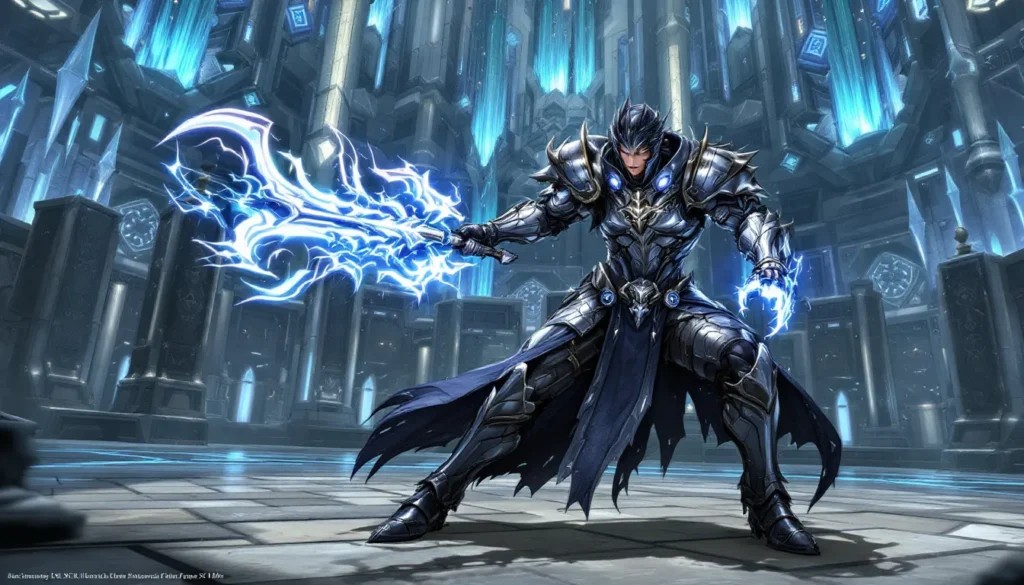
When you think of game-changing magic in Final Fantasy, one spell stands apart: Ultima. For over three decades, this devastating ability has served as the ultimate payoff for players willing to hunt endlessly, min-max their builds, or conquer the toughest endgame challenges. Whether you’re facing it in raids, wielding it yourself, or diving into Final Fantasy’s rich lore, Ultima represents everything the series does best, spectacle, narrative weight, and mechanically demanding gameplay. This guide covers everything you need to know about Ultima across the franchise, how to obtain it in modern titles like Final Fantasy XIV, and how to leverage it effectively in combat. If you’re serious about mastering Final Fantasy, understanding Ultima isn’t optional, it’s essential.
Table of Contents
ToggleKey Takeaways
- Ultima Final Fantasy’s most iconic spell across three decades—evolved from a basic offensive ability in 1987 to varied interpretations including summons, weapons, and raid mechanics that serve as ultimate power rewards.
- In Final Fantasy XIV, clearing Ultimate raids featuring Ultima Weapon requires job-level 90, 650+ item level gear, mastered rotations, and flawless team coordination—individual skill alone cannot carry a raid.
- Ultima carries significant narrative weight in Final Fantasy games, frequently appearing during world-ending events and signaling character milestones, making it a story beat disguised as a mechanical reward.
- Survivability takes priority over damage output when facing Ultima; stacking layered tank cooldowns, healer shields, and party mitigation are essential, as a single player’s mistake cascades into team wipes.
- Preparation demands multi-source research, weekly practice, proper consumables, and consistent 90%+ rotation uptime—showing up undergeared or under-practiced wastes your raid group’s time and prevents progression.
- Ultima symbolizes Final Fantasy’s design philosophy: spectacular visuals merged with mechanical depth and meaningful progression, where power is earned through dedication rather than simply given through leveling.
What Is Ultima in Final Fantasy?
Origins and Evolution Across the Series
Ultima debuted in the original Final Fantasy (1987) as a Level 8 White Magic spell, expensive, powerful, and a genuine reward for grinding and resource management. Back then, it represented the pinnacle of magical offense: all-hitting damage that could clear waves of enemies or soften up a brutal boss. The spell’s name itself carried gravitas. “Ultima” doesn’t mean “the last”, it’s Latin for “the final” or “the ultimate,” and Square envisioned it as the ultimate expression of magical power.
Over the next few decades, Ultima morphed across different titles. In Final Fantasy III, it became a high-level Black Magic spell requiring serious investment. Final Fantasy VII reinvented it as a limit break ability for certain characters, transforming it from pure offense into a character-specific ultimate move. By the time Final Fantasy X rolled around, Ultima had evolved into Aeons’ ultimate attacks and weapon-specific overdrives, proving the designers weren’t afraid to reinterpret their most iconic ability.
The evolution never stopped. Each game asked: what should Ultima mean in this world? The answer kept shifting, but the core remained constant, it’s the spell you work toward, the ability that makes you feel powerful, the moment you’ve “made it” in that game’s progression system.
Ultima as a Signature Ultimate Magic Spell
Ultima occupies a unique space in Final Fantasy’s identity. It’s not just another spell: it’s THE spell, the one that gets referenced in marketing, that shows up on cover art, that players remember decades later. Compare this to other franchises: most RPGs have powerful moves, but few have one ability that instantly triggers recognition across three generations of gamers.
What makes Ultima special is consistency wrapped in variance. Every version of Ultima feels appropriately powerful for its game’s context. In tactical titles, it’s devastating but costly. In action-oriented games, it becomes a skill-check moment. In MMOs like Final Fantasy XIV, it’s the culmination of raid progression and strategy. The designers treat Ultima as a sacred responsibility, it can’t just hit hard: it has to feel ultimate, and it has to earn its place in whatever game hosts it.
This signature status means Ultima carries narrative weight too. When Ultima appears, developers aren’t just introducing a spell, they’re often foreshadowing major story beats, marking character milestones, or telegraphing that a player’s reached the game’s true endgame. That’s why Ultima feels less like ability number 247 and more like a story beat disguised as a mechanical reward.
Ultima Across Different Final Fantasy Games
Classic Entries: Final Fantasy VI Through IX
Final Fantasy VI (1994) introduced Ultima as an esper, a summonable entity with massive power. Acquiring it required serious work: finding scattered clues, defeating specific bosses, and often resorting to FAQs before the internet made research trivial. Once you had it, summoning Ultima felt genuinely earned, delivering screen-filling animations and damage that justified the hunt.
Final Fantasy VII’s approach was completely different. Ultima Weapon became a limit break weapon for Red XIII, not a spell at all. This was developers saying: “Ultima doesn’t need to be magic, it’s a concept we can apply anywhere in the game.” The weapon-based interpretation let different character classes access Ultima’s power through their own lens.
Final Fantasy VIII took another wild turn. Ultima magic came from Guardian Forces, but obtaining it involved complex junction systems, grinding, and understanding FF8’s notoriously opaque mechanics. Players either committed fully to unlocking it or moved on, making Ultima a marker of true dedication rather than something everyone would experience.
Final Fantasy IX brought Ultima back as a spell, Dagger’s ultimate ability, learned through Eidolon acquisition. It fit the game’s more classic feel while maintaining the modern mechanic of character-specific ultimate abilities. By this point, Ultima had successfully proven it wasn’t locked into a single design philosophy: it could be a spell, a weapon, a summon, or whatever served the game.
Modern Interpretations: Final Fantasy XIV and Beyond
Final Fantasy XIV took Ultima and built an entire raid tier around it. The “Ultima” raids aren’t just challenging, they’re mechanically deep puzzles where understanding Ultima’s role in the story directly informs how players need to execute strategies. This is peak Final Fantasy design: lore and gameplay feeding each other.
More specifically, XIV’s Bahamut Coils of Bahamut raid series features Ultima Weapon as a superboss encounter. The fight demands perfect coordination, consistent DPS checks, and mastery of mechanics. Defeating it drops Ultima-themed gear and weapons, making the visual reward match the mechanical challenge. For raiders, clearing Ultima Weapon represents genuine skill expression.
Final Fantasy XV treated Ultima differently, it became royal arms, ancient weapons tied to the kingdom’s history rather than summonable spells. This fit XV’s action-combat focus, letting players charge devastating ability chains rather than relying on traditional magic systems.
Final Fantasy XVI simplified the approach. Ultima returned closer to its roots: a powerful spell players could learn and cast, tied directly to the story’s climax and the protagonist Clive’s journey. It wasn’t hidden behind obtuse mechanics: it was a straightforward narrative reward that felt right for an action RPG’s power fantasy.
Spin-Offs and Alternative Versions
Dissidia Final Fantasy, the crossover fighting game, featured Ultima as a summon ability players could deploy in combat. This let fans experience Ultima through an entirely new lens, not as an RPG ability, but as a fighting-game asset with cooldowns and strategic positioning.
Final Fantasy XIV Online’s expansions have continued reinterpreting Ultima. The Shadowbringers expansion introduced Ultima’s role in the Ascians’ schemes, making it a lore element as much as a mechanical one. Players didn’t just fight Ultima: they understood why it mattered to the story. This integration of mechanics and narrative is what separates FF XIV from many competitors.
Other spin-offs, Final Fantasy Type-0, Final Fantasy Brave Exvius, Final Fantasy Opera Omnia, all included Ultima in some form. Sometimes it’s a standard summon, sometimes a limited-time spell, sometimes part of a character’s unique ability set. The consistency is remarkable: across dozens of games, Ultima almost always means “this is the powerful thing you want.”
How to Obtain Ultima in Final Fantasy XIV
Ultimates Raids and Acquisition Methods
Final Fantasy XIV has released several “Ultimate” raids over the years, and while not all feature Ultima directly, several are built around it or feature Ultima-adjacent mechanics. The most relevant for 2026 players is the Omega Protocol raid series and various trials. These aren’t your standard raiding experience, Ultimates demand mechanical perfection, consistent damage phases, and teams comfortable with zero-margin mechanics.
To access Ultimate raids in FF XIV (as of patch 6.5 and beyond), you’ll need to:
- Complete the main story quest through the most recent expansion
- Clear the related Normal and Savage raid tiers to unlock Ultimate access
- Form a static (dedicated raid group) or join through communities
- Execute multiple practice sessions before attempting the final fight
The rewards for clearing Ultimate raids include special weapons, armor, and most importantly, the title and achievement showing you’ve beaten the game’s hardest content. Ultima weapons from Ultimate clears carry prestige, everyone knows what those weapons represent.
As of early 2026, Final Fantasy 14 patch notes regularly reference Ultimate raid adjustments and balance changes. Checking patch notes before attempting any Ultimate is non-negotiable: nerfs can make strategies obsolete, while buffs to your job might fundamentally change your rotation.
Leveling and Preparation Requirements
Before even touching an Ultimate raid, your character needs to be job-level 90 (current maximum) with appropriate gear. Minimum item level for Ultimate raids is typically 650-680 depending on the encounter. You don’t need 5-star crafted gear, but you need consistency, don’t show up undergeared, and don’t expect to carry dead weight through DPS checks.
Preparation extends beyond gear. Study the fight through video guides on platforms like GameSpot and community resources. Learn every mechanic, every cue, every positional requirement. Ultimate raids don’t forgive mistakes: one person’s error cascades into a wipe. Your team needs to be on the same page.
Class selection matters significantly. While all jobs can technically clear Ultimas, meta jobs dominate high-end raiding. Check current tier lists before committing, what works now might shift in the next patch. If you’re unsure about class viability, the Final Fantasy 14 classes tier list resource can guide your selection.
Buffing and rotation optimization become critical at this level. You’re no longer playing your job: you’re perfecting it. Every GCD (global cooldown) matters. Weaving oGCD (off-global cooldown) abilities perfectly. Positioning to maximize raid buff windows. It sounds intense because it is, that’s what separates Ultimate raiders from casual players.
Gameplay Mechanics and Combat Effectiveness
Damage Output and Scaling Factors
When Ultima actually casts in FF XIV encounters, the damage is substantial but not one-hit-kill material. Instead, Ultima’s threat comes from frequency, mechanics, and context. A single Ultima cast might deal 50-60K damage to a 4-player party, but if your tank can’t handle the next auto-attack after that spike, you’re wiping.
Scaling factors matter enormously. Enemy stats, player gear, job-specific mitigation tools, and raid buff alignment all influence whether Ultima’s damage is survivable. A Dark Knight with shields up, a Paladin’s Holy Sheltron active, and Redmage’s barrier up can handle spikes that would instantly delete a unprepared Healer. This is why tank job knowledge and cooldown management separate good raiders from struggling ones.
Damage mitigation stacking is essential. Don’t rely on a single tool, tank busters like Ultima always demand layered defenses. Use personal cooldowns, party shields, and healing stacks simultaneously. A coordinated team turns Ultima into “hey, use your cooldowns” rather than “oh no, Ultima.” This is the difference between learning content and executing it.
The actual damage formula in FF XIV scales with enemy level and player gear. As patches release and gear power creeps, the same Ultima cast becomes proportionally less threatening. This is why Final Fantasy 14 patch notes regularly mention ability adjustments, developers want mechanics to remain threatening, not trivial.
Strategic Use in PvE and PvP Scenarios
In PvE (Player versus Environment) raiding, Ultima isn’t something you’re casting, it’s something you’re surviving and responding to. Your strategy involves identifying the cast, calling it out, using cooldowns, and immediately preparing for the follow-up mechanic. Most raid deaths involving Ultima stem from tunnel vision or failing to recognize the mechanic in real-time, not from the damage itself being impossible to handle.
Positioning matters. If Ultima has an associated AoE (Area of Effect), standing in it is your job. Some players develop “standing in bad” habits from casual content, Ultimate raids punish that ruthlessly. You need flawless positioning, which means knowing the arena, understanding boss phases, and adapting on the fly when patterns deviate slightly.
PvP (Player versus Player) Ultima usage differs entirely. In FF XIV’s PvP modes like Crystalline Conflict, players can execute abilities inspired by Ultima spells, but they’re not literal Ultima casts. They function as high-damage abilities with cooldowns, fitting into rotation strategies. Effective PvP play involves predicting enemy cooldowns, managing distance, and landing abilities on scattered opponents, completely different from raid mechanics.
Team coordination trumps individual skill. A party that moves together, cooldowns-ready and communicative, will clear Ultima content consistently. A group of exceptional individual players who can’t sync up will fail repeatedly. This is why raid groups invest heavily in Discord communication and weekly practices, Final Fantasy 14 Discord communities regularly share tactics and build friendships that translate to better raid execution.
The Lore and Storytelling Behind Ultima
Narrative Significance in the Final Fantasy Universe
Ultima isn’t just powerful, it’s significant. In Final Fantasy XIV’s Shadowbringers expansion, Ultima becomes central to understanding the Ascians, ancient beings who’ve manipulated history for countless ages. The spell isn’t random: it’s a tool created by primordial forces, tied to the world’s fundamental structure. Learning about Ultima means learning about FF XIV’s entire cosmology.
Across the series, Ultima frequently represents forbidden knowledge or power beyond mortal comprehension. In Final Fantasy VI, Kefka’s obsession with ultimate power mirrors players’ quest for Ultima. In FF XIV, the Ascians’ manipulation of Ultima reflects their goal of reshaping reality itself. Developers use Ultima as a narrative shorthand: “this power exceeds normal rules.”
Character arcs often intertwine with Ultima. When a protagonist gains access to Ultima, it signals a shift in their journey. They’ve transcended their limitations. They’re approaching the story’s climax. In FF XVI, acquiring Ultima feels like Clive embracing his full potential. In FF XIV, fighting Ultima Weapon represents confronting the Ascians’ plans directly. The spell marks narrative turning points.
The naming convention matters too. “Ultima” appears in other languages across the games, some versions translate it, others keep the Latin root. This consistency, whether deliberate or coincidental, reinforces Ultima’s status as something universal. It’s not a spell that belongs to one world: it’s a concept that transcends individual Final Fantasy settings.
Connection to World-Ending Events and Antagonists
Ultima frequently appears when the stakes are highest. In several Final Fantasy titles, using or encountering Ultima coincides with apocalyptic scenarios. The spell represents power sufficient to end worlds, or save them, depending on who wields it. This ties Ultima to the series’ recurring theme: how immense power demands moral choice.
Antagonists often seek Ultima or have access to it. They recognize what players understand: Ultima is the ultimate tool. Kefka in FF VI wants ultimate power to reshape the world to his nihilistic vision. The Ascians in FF XIV seek to recover Ultima as part of their plan to rejoin their dead world with the living one. Final Fantasy XIII’s Orphan weapon resembles Ultima in function if not in name, ancient, world-altering power that protagonists must oppose.
This pattern teaches players that Ultima isn’t morally neutral. It’s a tool, and tools reflect their users’ intentions. That’s why Ultima’s narrative beats carry weight. You’re not just getting a powerful ability: you’re often making a choice about what Ultima should be used for.
Recent games lean into this harder. FF XVI explicitly frames Ultima as something that could destroy or rebuild civilization. FF XIV’s Endwalker expansion uses Ultima conceptually to explore whether saving the world justifies breaking its rules. These aren’t simple power-fantasy moments, they’re philosophical questions wrapped in spectacular visuals.
Check Game Rant for deeper lore breakdowns and story analysis, gaming journalists frequently examine Final Fantasy’s thematic patterns and how Ultima fits into larger narrative architecture.
Tips and Strategies for Mastering Ultima
Build Optimization and Class Synergies
If you’re pursuing Ultima-related content, optimize for survivability first, damage second. In Ultimate raids, your job isn’t to top DPS meters, it’s to execute mechanics cleanly while maintaining consistent damage. A player dealing 20% less damage but never missing mechanics beats a player dealing 20% more damage but causing wipes.
Class synergies depend on your role:
- Tanks: Prioritize cooldown coverage and self-healing. Dark Knight excels at this phase. Final Fantasy 14 Dark Knight guide covers advanced strategies for tank busters like Ultima.
- Healers: Focus on oGCD healing and party shields. Astrologian and White Mage offer different approaches: choose what matches your playstyle.
- DPS: Balance burst windows with consistent damage. Some jobs have cooldown-dependent bursts: others rotate through steady abilities. Know which you are.
Gear materia selection (stat allocation through socketed enhancements) should match content difficulty. For Ultimates, prioritize crit and direct hit for DPS, determination for tanks, and SpS (Spell Speed) or SkS (Skill Speed) depending on your healer job. These minor optimizations compound over an entire raid.
Rotation optimization is non-negotiable. You need to understand your job’s rotation inside-out, including how much GCD weaving it allows, whether movement requires GCD sacrifices, and which cooldowns align with raid buff windows. A DPS player with a 60% uptime rotation will never clear Ultimate content. You need 90%+ optimization to pass DPS checks.
Common Mistakes and How to Avoid Them
Mistake #1: Under-preparing. Players join Ultimate raids after watching a single guide video, thinking that’s sufficient. It’s not. Watch multiple guide sources. Understand multiple perspectives on the same mechanic. Practice in raid finder, do weekly clears, and treat every pull as a learning opportunity.
Mistake #2: Solo-carrying mentality. You can’t outskill four other people’s mistakes. Ultimate raiding demands trust. If your static isn’t communicating, practicing, or taking it seriously, no amount of individual skill fixes that. Find a group that matches your dedication.
Mistake #3: Gear inadequacy. Showing up to Ultimate raids with 615 item level when the recommended is 650+ doesn’t make you a “challenge runner”, it makes you dead weight. Gear up before raid time. Your party’s time is valuable.
Mistake #4: Ignoring cooldown planning. Tanks: don’t hoard cooldowns for “maybe I’ll need them.” Use them proactively, especially on tank busters like Ultima. Healers: plan your ogcd windows. Don’t spam big spells and leave yourself defenseless. DPS: align burst with buff windows. Coordination, not panic.
Mistake #5: Mechanical tunnel vision. You’re so focused on one mechanic you miss the next one. As soon as you resolve Ultima’s cast, your brain should already be tracking what’s next. Raiders call this “living in the future”, always thinking two mechanics ahead.
Mistake #6: Neglecting gil management. While pursuing Ultima content, you’ll need gil for gear repairs, potions, food buffs, and raid consumables. Check the Final Fantasy 14 Gil: guide if you’re cash-strapped.
About recent content shifts: Gematsu regularly covers Final Fantasy XIV announcements, including new Ultimate raids and mechanics changes. Subscribe to such sources to stay updated, Ultima encounters evolve with patches, and what worked last month might need adjustments this month.
Conclusion
Ultima represents everything Final Fantasy does at its best, spectacular visuals, mechanical depth, narrative significance, and a sense of earning your power. Whether you’re chasing it through Ultimate raids in FF XIV, uncovering it in the latest mainline entry, or simply appreciating its role across three decades of gaming history, Ultima deserves respect.
Mastering Ultima content requires dedication: gear preparation, mechanic study, team coordination, and consistent practice. It’s not about raw individual skill, it’s about understanding your role, executing your responsibility, and trusting your teammates to do the same. This is raid gaming at its core.
For 2026 players, the journey toward Ultima is more accessible than ever, yet mechanically more demanding. Modern FF XIV encounters respect player skill while remaining fair. You won’t stumble into Ultima clears through overleveling: you’ll earn them through preparation and execution. That’s what makes defeating Ultima, or wielding it yourself, genuinely satisfying. The power isn’t given, it’s fought for, learned, and eventually, mastered.

