
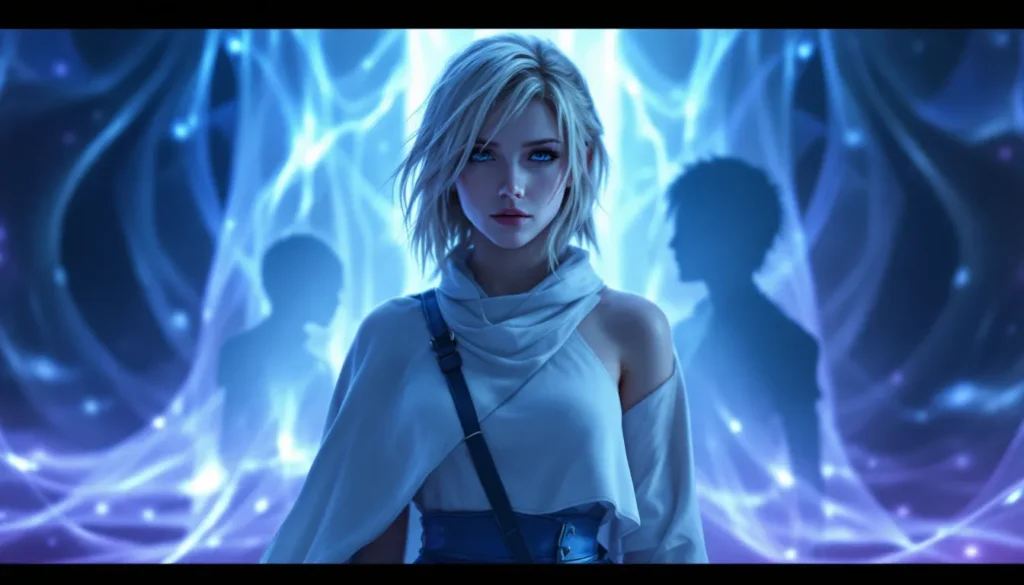
Serah Farron isn’t your typical Final Fantasy heroine. She’s not the lead character in her debut game, she doesn’t start the story as a powerful warrior, and yet she becomes the emotional and narrative anchor of one of the franchise’s most divisive and ambitious trilogies. From her introduction as a seemingly minor character in Final Fantasy XIII, Serah evolves into a full protagonist, time-traveler, and eventually the last hope for saving multiple worlds. If you’ve played the XIII trilogy, you’ve experienced her journey. If you haven’t, you’ve probably heard the debates about her role in the story. Either way, understanding Serah Farron is essential to understanding one of Final Fantasy’s most unique narrative arcs.
Table of Contents
ToggleKey Takeaways
- Serah Farron transforms from a supporting character into the emotional and philosophical anchor of the Final Fantasy XIII trilogy, evolving across three games from a L’Cie victim into an active protagonist making crucial decisions across time and alternate realities.
- Serah Final Fantasy’s narrative arc explores complex themes of fate versus free will, showing how individuals can make meaningful choices within predetermined constraints rather than simply overcoming their circumstances.
- Her combat role mirrors her narrative growth, expanding from limited support abilities in Final Fantasy XIII to full paradigm flexibility in XIII-2, reflecting her journey toward agency and independence.
- Serah’s relationships with Lightning and Noel provide emotional anchors that ground the trilogy’s philosophical themes in genuine human connection, making her story resonate with players experiencing helplessness or uncertainty.
- The bittersweet resolution of Serah’s character arc avoids traditional ‘happy ending’ tropes, instead committing to the trilogy’s themes and demonstrating that personal growth matters even within cosmic systems beyond individual control.
- Serah’s appearances across Dissidia, Final Fantasy XIV crossovers, and other spin-offs have established her as a recognized character beyond the XIII trilogy, cementing her legacy nearly two decades after her debut.
Who Is Serah? Understanding The Character’s Origins And Evolution
First Appearance In Final Fantasy XIII
Serah Farron steps into the story of Final Fantasy XIII as Lightning’s younger sister, a seemingly ordinary eighteen-year-old girl living in Bodhum. Within the first few hours, she becomes a L’Cie, a chosen human who receives a divine focus from the Fal’Cie. This choice sets the entire narrative in motion. Unlike protagonists who claim their role through strength or ambition, Serah becomes essential because she’s chosen by forces beyond her comprehension, marking her as different from the start.
When she’s introduced, players might dismiss her as a damsel-in-distress archetype. The game does little to dispel this at first. She’s kidnapped, transformed into crystal, and drives the main plot forward through her circumstances rather than her own agency. But this isn’t a weakness, it’s the foundation of her character’s actual arc.
Role And Significance In The XIII Trilogy
Across the XIII trilogy, Serah’s role transforms dramatically. She begins as the story’s catalyst but evolves into something far more meaningful: a character whose growth directly reflects the trilogy’s themes of predetermined fate versus free will. Each game shifts her position, giving her progressively more control over her own destiny.
In Final Fantasy XIII, she’s the innocent who unknowingly starts everything. In Final Fantasy XIII-2, she becomes the active protagonist making crucial decisions. In Lightning Returns: Final Fantasy XIII, she’s the force driving the narrative toward resolution. This progression from passenger to driver to savior is intentional storytelling, and it’s what makes Serah’s journey resonate with players who stick with the narrative.
Serah In Final Fantasy XIII: The Catalyst Of The Story
Being Chosen As A L’Cie And Its Consequences
Becoming a L’Cie is Serah’s defining moment in the first game. The Fal’Cie Anima marks her with a focus, a divine mission she doesn’t understand and didn’t ask for. This concept is central to Final Fantasy XIII‘s themes: the world operates on predetermined chains of command, and humans are often just pieces in a larger game.
The immediate consequence is that Serah is labeled a threat to Cocoon’s social order. The Sanctum, the government ruling the floating world of Cocoon, hunts her as dangerous. Her sister Lightning, initially unaware of Serah’s status, joins the hunt herself before learning the truth. This creates one of the game’s core emotional tensions: Serah’s very existence as a L’Cie creates conflict among the people she loves.
What makes Serah’s situation unique is that she doesn’t want the responsibility. She’s not a reluctant hero who eventually embraces her role, she’s terrified and confused throughout the first game. This vulnerability makes her relatable in a way that many Final Fantasy protagonists aren’t. She’s not fighting for glory or to save the world because it’s her destiny. She’s just trying to survive and protect her sister.
The Crystallization Plot And Its Impact On Gameplay
Serah’s crystallization near the end of Final Fantasy XIII is a shocking moment that removes her from active gameplay, transforming her into a static objective. Players spend the entire game trying to prevent her fate, only to watch it happen anyway. This subverts typical video game narrative expectations, usually, a game’s story follows the protagonist’s success. Here, Serah’s crystallization feels like a loss even though the party’s efforts.
Gameplay-wise, her removal from the party removes one of the team’s key roles. Throughout Final Fantasy XIII, Serah functions as a Medic and Ravager, making her versatile in combat. Her job classes include White Mage (healing), Black Mage (damage), and Synergist (buffs). Players who relied on her for support suddenly lose a critical piece of their team composition, forcing them to adapt their paradigm strategies in the final chapters.
Narratively, her crystallization isn’t the end of her story, it’s the catalyst for the next chapter. Her crystallized form becomes the central mystery and driving force for Final Fantasy XIII-2.
Final Fantasy XIII-2: Serah As The Main Protagonist
Her Journey Through Time And Alternate Realities
In Final Fantasy XIII-2, Serah becomes the actual protagonist, and the shift is immediate and pronounced. She’s no longer defined by her relationship to Lightning or her status as a victim. Instead, she’s a young woman actively investigating her own mystery, traveling through time, and confronting the nature of destiny itself.
The game’s plot centers on temporal disruptions called “Time Anomalies” that are unraveling the world’s timeline. Serah, partnered with Noel, a boy from the future, travels across different eras to understand what’s happening and why her crystallized form is central to everything. Unlike her passive role in the first game, Serah drives the investigation forward. She asks the questions, makes the calls, and chooses which timeline events to address.
This journey takes her through multiple versions of Cocoon and Gran Pulse, the two worlds of the XIII universe, across different time periods. Players witness alternate versions of familiar locations and encounter versions of characters from different timelines. The meta-narrative implication is profound: Serah is literally choosing between different realities, and her choices have consequences that ripple across dimensions.
A key element of XIII-2 is that Serah begins to question whether she’s truly in control. Is she freely making choices, or is she following a predetermined script? This internal conflict becomes the emotional heart of the game and sets up the trilogy’s final chapter.
Character Development And Gameplay Role
As the protagonist, Serah gains expanded Job Classes compared to her role in XIII. She can equip Commando (physical damage), Ravager (magical damage), Medic (healing), Sentinel (tank), Saboteur (debuffs), and Synergist (buffs). This flexibility makes her an adaptable solo character, players can build her to fill almost any role depending on their chosen paradigms.
Her Abilities include classic Final Fantasy spells like Firaga, Curaga, and Haste, alongside XIII-specific abilities like Steal and Deprotect. She also learns character-specific moves like Piercing Blow, a physical attack that scales with her Commando class levels. The game also introduces Feral Link abilities when paired with certain monsters, giving her summon-like options in combat.
Character-wise, Serah matures significantly. She’s still compassionate and sometimes uncertain, but she shows genuine agency and courage. She confronts the possibility that she might be destined to repeat the same tragic cycle as her sister, and instead of accepting that fate, she actively works to change it. The game presents this as the central theme: predetermined fate versus the power of individual choice.
Lightning Returns: Final Fantasy XIII And Serah’s Fate
The Final Installment’s Story And Serah’s Involvement
Lightning Returns: Final Fantasy XIII is a direct sequel to XIII-2, though it shifts focus significantly. The game takes place approximately 500 years after the previous game, in a dying world called Nova Chrysalis. Lightning, the first game’s actual protagonist, returns as the main character, but Serah’s situation is the core conflict.
Serah’s soul is trapped in a Chaos realm, slowly dying as the universe decays. Lightning is tasked with saving her in the only way possible: by completing a final mission in the doomed world and obtaining God’s Powers to rewrite reality. The game operates as a race against time, players have 13 days to prepare for a final showdown that will determine whether Serah’s soul can be saved.
This setup positions Serah as both the motivation and the prize. Unlike the previous games where she actively drove the plot, here she’s the objective driving Lightning’s quest. But, the game subverts this slightly: Serah isn’t helpless. Throughout Lightning Returns, players encounter her consciousness in the Chaos realm, and she offers advice and support to Lightning. She’s not entirely passive, she’s just physically separated from the action.
The emotional weight of Lightning Returns comes from the sister relationship. Lightning’s entire mission is personal: save Serah because she’s her family. The game frames this as both the greatest strength and greatest weakness of her quest. Love and desperation can drive extraordinary actions, but they can also cloud judgment.
Resolution Of Her Character Arc
The trilogy’s conclusion hinges on how Serah’s arc concludes. After all three games exploring themes of destiny, choice, and sacrifice, Serah’s ultimate fate represents the trilogy’s final statement on these themes. The resolution involves the mystery of her true nature, whether she’s a unique individual or a predetermined piece of a larger cosmic system.
Without spoiling the ending, Serah’s resolution is bittersweet. She achieves a form of victory, but it requires sacrifice and an acceptance of limited agency. The XIII trilogy doesn’t offer a triumphant “beating fate entirely” ending. Instead, it suggests that even within predetermined structures, individuals can find meaning and make choices that matter. Serah’s arc completes this message by demonstrating that her journey, across three games and multiple timelines, was genuinely her own, regardless of the circumstances that initiated it.
This conclusion divides the fanbase. Some players find it unsatisfying that Serah doesn’t get a traditional “happy” ending. Others appreciate that the trilogy commits to its themes rather than compromising them for audience comfort. Either way, the resolution solidifies Serah’s position as one of Final Fantasy’s most narratively complex characters.
Serah’s Abilities, Classes, And Combat Mechanics
Job Classes And Paradigm Roles Across The Games
Serah’s combat versatility increases with each installment, reflecting her growing agency in the narrative. In Final Fantasy XIII, her available paradigms are limited compared to Lightning, emphasizing her supporting role. She can fill Medic, Ravager, and Synergist roles, all support-oriented positions that reinforce her role as a party member rather than a solo threat.
By XIII-2, Serah’s job flexibility expands significantly. She gains access to Commando, Sentinel, and Saboteur roles alongside her previous options, making her capable of filling any paradigm position. This gameplay change mirrors her narrative shift to protagonist status. Players building a solo party around Serah can create paradigm configurations that would’ve been impossible in the first game.
Lightning Returns introduces a new Garb system, replacing traditional job classes. Serah doesn’t appear as a playable character in this system, but she equips Schema (armor and weapon combinations) in the story that define her combat role during narrative moments. This shift from the paradigm system to the garb system reflects the trilogy’s evolution in design philosophy.
Across all three games, Serah’s role emphasizes flexibility. Even when she’s not the main protagonist, her ability to adapt across multiple positions makes her valuable in varied team compositions. This gameplay design intentionally mirrors her narrative role as a character trying to navigate between fate and free will, she’s never locked into a single path.
Key Abilities And Weapons
Serah’s signature abilities remain consistent across the XIII trilogy, though their power levels scale with progression. Her spell toolkit includes:
- Cure / Cura / Curaga: Basic healing spells that improve as her Medic class ranks up
- Regen: Healing-over-time buff, crucial for extended fights
- Haste: Increases ATB speed for the entire party
- Firaga / Blizzaga / Thundaga: Offensive spells scaling with her Ravager class
- Deprotect / Deshell: Debuffs that lower enemy defensive stats, learned as Saboteur
- Brave / Faith: Party buffs increasing physical and magical damage respectively
Her weapons vary by game. In XIII and XIII-2, she equips Bow Weapons as her standard equipment. Various Bowguns and upgraded bows improve her stats and sometimes grant additional properties, some increase damage, others boost elemental effectiveness. By endgame, Serah’s best bows like the Punisher or Lifebane rival other characters’ damage output when properly leveled.
In XIII-2, she gains access to additional weapons through Infusions, a crafting system that allows players to upgrade and customize equipment. This opens possibilities for highly optimized gear that maximizes her damage or support potential, depending on how players choose to build her.
One standout ability in XIII-2 is Chaos Eater, a unique Feral Link attack when she’s paired with the Undead Chaos monster. It’s one of the most powerful Feral Link abilities available, dealing massive damage and stunning enemies. This ability becomes crucial for endgame content and challenging marks.
The progression of her abilities across the trilogy reflects her growing power and confidence. She starts as a supplementary healer and becomes a character who can lead damage phases or sustain the party through extended battles. This mechanical progression intentionally reinforces her narrative arc from victim to active agent.
Other Appearances: Serah Beyond The XIII Series
Dissidia Final Fantasy And Spin-Off Appearances
Dissidia Final Fantasy was the first major appearance of Serah outside the XIII trilogy. The game, released on PSP in 2009 (with an arcade version and later remakes), brought together iconic characters from across Final Fantasy history for a massive crossover fighting tournament. Serah, selected from the XIII universe, brought her bow-wielding combat style to the versus format.
In Dissidia, Serah functions as a mid-range character using ranged attacks and magical abilities. Her Brave Attacks focus on distance management and projectile damage, while her HP Attacks deliver finishing blows once her Brave meter exceeds an opponent’s. Her playstyle emphasizes zoning and maintaining distance, fitting for a character whose primary weapon is a bow. According to RPG Site‘s coverage of the Dissidia series, Serah quickly became a popular pick among players learning the game’s mechanics, partly because her ranged attacks felt more intuitive than the close-range combos demanded by other characters.
Her appearance in Dissidia raised her profile significantly. Players who hadn’t experienced the XIII trilogy gained exposure to the character, while series fans appreciated seeing her reimagined in a fighting game context. The game included story segments featuring Serah that acknowledged her XIII trilogy arc without requiring players to have completed those games.
Crossover Games And Guest Cameos
Beyond Dissidia, Serah has appeared in numerous Final Fantasy crossover titles. Dissidia Final Fantasy NT (the arcade successor) featured her with updated mechanics. Dissidia Final Fantasy Opera Omnia, a mobile game, includes her as a recruitable character with abilities adapted to the game’s real-time battle system. These appearances keep her relevant to Final Fantasy’s broader community, even as the XIII trilogy became increasingly niche.
She’s also made appearances in Final Fantasy XIV during special crossover events. These are timed collaboration events that bring XIII trilogy characters into the MMO, allowing players to acquire Serah-themed equipment and participate in story encounters featuring her. Gematsu frequently covers these crossover announcements, noting that XIII trilogy events tend to generate significant interest among FFXIV players nostalgic for the original PS3 generation.
Other appearances include mobile games and rhythm games like Final Fantasy Theatrhythm. While these are smaller roles compared to her presence in Dissidia, they demonstrate that Serah has transcended the XIII trilogy to become a recognized Final Fantasy character in the franchise’s broader ecosystem.
Why Serah Resonates With Fans: Character Impact And Legacy
Narrative Themes And Emotional Depth
Serah’s appeal stems from the XIII trilogy’s willingness to explore complex themes through her character. The series examines fate, free will, sacrifice, and the cost of agency in ways that feel genuinely earned rather than preachy. Serah embodies these themes through her journey, she begins believing herself powerless, gradually recognizes her agency, and eventually confronts the boundaries of that agency.
Unlike protagonists who simply overcome their circumstances, Serah’s journey is about learning to make meaningful choices within constraints she can’t fully escape. This philosophical depth appeals to players who want their character arcs to say something meaningful about the human condition. She’s not fighting to defeat evil or save the world, she’s fighting to understand whether her choices actually matter in a universe that seems predetermined.
The emotional journey resonates particularly with audiences who’ve experienced helplessness or felt trapped by circumstances beyond their control. Serah’s growth from passive participant to active decision-maker, even knowing she can’t control everything, is genuinely inspiring in a way that straightforward “hero defeats villain” narratives often aren’t.
Relationship With Lightning And Other Characters
Serah’s most significant relationships are with Lightning and Noel, and these connections anchor her emotional journey. With Lightning, Serah represents everything her sister is fighting for, but also the thing that complicates Lightning’s worldview. Lightning believes in rigid control and predictable order. Serah’s unpredictable nature and willingness to embrace uncertainty directly challenge Lightning’s philosophy.
Their sister dynamic is refreshingly complex. They love each other genuinely, but they’re fundamentally different people with different coping mechanisms. Lightning handles trauma by becoming cold and controlled. Serah handles it by remaining open and trusting. Neither approach is presented as entirely right or wrong, they’re just different ways of engaging with an uncertain world.
With Noel, Serah develops a different kind of bond. Noel comes from a dystopian future where Serah becomes a godlike figure worshipped by his civilization. As he travels back in time with her, he confronts the gap between the legend he was raised to believe and the real, complex person Serah actually is. This relationship explores themes of idolization and disillusionment in mature ways that many games avoid.
Fans consistently cite these relationships as central to why they’re invested in Serah’s story. The XIII trilogy doesn’t isolate its protagonist in a power fantasy: instead, it grounds the narrative in how her journey affects the people around her. This interconnected approach to storytelling feels more real and emotionally resonant than franchises that treat relationships as secondary to individual hero narratives.
When discussing the XIII trilogy’s legacy, Shacknews and other gaming outlets frequently highlight Serah’s characterization as one of the series’ strengths, noting that even players critical of the trilogy’s pacing or exposition acknowledge her character work as genuinely compelling. For many fans, Serah’s emotional journey is the reason they return to the XIII trilogy years after release, overlooking elements they initially found frustrating.
Conclusion
Serah Farron’s journey across the Final Fantasy XIII trilogy represents one of gaming’s more ambitious character arcs. She transforms from a seemingly minor character into the emotional and philosophical heart of three games spanning multiple worlds and timelines. Her growth from helpless victim to agent of her own destiny, and her continued struggle with the boundaries of that agency, makes her a nuanced protagonist rather than a straightforward hero.
What sets Serah apart is that her story doesn’t resolve with traditional “beating fate” catharsis. Instead, the trilogy commits to a more sophisticated exploration of what choice means when everything feels predetermined. This philosophical depth, combined with genuine emotional stakes and complex relationships, explains why she resonates with fans nearly two decades after her debut. She’s not the strongest Final Fantasy protagonist, and the games featuring her are deliberately challenging and unconventional.
But for players willing to engage with the XIII trilogy’s themes and narrative ambition, Serah’s journey becomes unforgettable. Whether you’re revisiting her story or experiencing it for the first time, understanding Serah Farron is understanding what happens when a video game character is treated as genuinely complex rather than simply archetypal. That’s her lasting legacy in the Final Fantasy franchise.

