
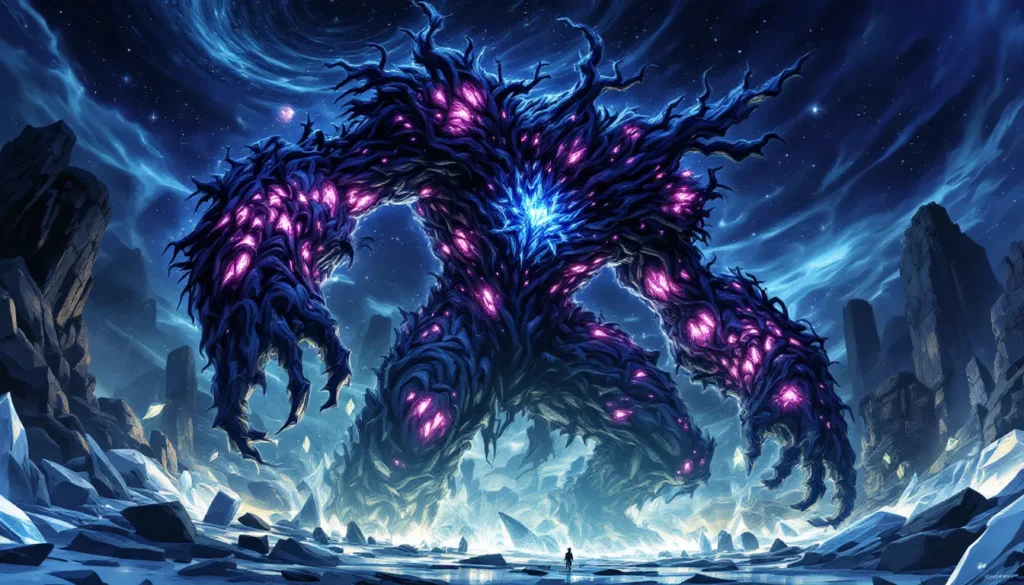
When you think of iconic Final Fantasy villains, Exdeath might not be the first name that springs to mind, but it absolutely should be. This god-like antagonist from Final Fantasy V remains one of the most terrifying and philosophically complex enemies in the entire series. Exdeath isn’t just a villain with ambitions of conquest: he’s an entity of pure destruction bent on collapsing reality itself into the Void. Unlike many of his peers in the franchise, Exdeath operates on a level of nihilistic logic that makes him genuinely unsettling. Whether you’re revisiting FFV on modern platforms or experiencing it for the first time, understanding Exdeath’s origins, motivations, and evolution throughout the game adds layers of depth to one of JRPG gaming’s greatest adventures.
Table of Contents
ToggleKey Takeaways
- Exdeath is a god-like Final Fantasy V villain born from Dark Matter who fundamentally embodies destruction itself, making him philosophically distinct from typical revenge-driven antagonists.
- Unlike other Final Fantasy villains, Exdeath operates from nihilistic logic that non-existence is mercy, making him genuinely unsettling and impossible to negotiate with.
- Exdeath’s power escalates throughout the game as he absorbs the four protective crystals, transforming into Neo Exdeath—a cosmic horror entity that operates outside normal reality within the Void.
- The final boss battle against Exdeath tests player adaptability and thematic resistance to nihilism, with mechanics like Almagest and character permanent removal requiring preparation and tactical precision.
- Exdeath’s legacy influenced subsequent Final Fantasy antagonists and established templates for cosmic horror villains that prioritize consistent inhuman logic over sympathetic motivations.
- Despite Final Fantasy V’s lesser prominence, Exdeath remains a consistently ranked iconic villain in fan consciousness and continues inspiring cosmic horror design across modern gaming and spin-off titles.
Exdeath Overview: From Humble Origins to Ultimate Villain
The Dark Matter Entity and Its Existence
Exdeath exists as something fundamentally alien to the world of Final Fantasy V. He’s not a demon summoned from another plane or a sorcerer who cheated death, he’s an entity born from Dark Matter, a sentient force of pure destruction that predates civilization itself. This distinction matters enormously. The Dark Matter manifested in the form of a sentient tree, eventually gaining consciousness and hunger. What makes Exdeath terrifying isn’t superhuman strength or magical prowess, but the fact that he’s an incarnation of annihilation itself.
The nature of his existence shapes everything about his character. Unlike typical Final Fantasy antagonists driven by revenge, ambition, or twisted ideology born from trauma, Exdeath operates from existential certainty. He doesn’t want to destroy everything, destruction is simply his fundamental nature, as natural to him as breathing is to humans.
How Exdeath Came to Be in Final Fantasy V
Exdeath’s origin story unfolds gradually throughout FFV, revealing itself in fragments. Originally sealed away by the Four Warriors of Dawn centuries before the game’s events, Exdeath was imprisoned within a crystal barrier specifically designed to contain his power. This wasn’t a temporary prison, the barrier was meant to hold forever.
The sealing came at tremendous cost. The Four Warriors of Dawn couldn’t destroy Exdeath, only restrain him. Over centuries, the seals weakened. When the game begins, the Crystal of Wind shatters, triggering a cascade of failures across all four protective barriers. Exdeath’s power begins leaking back into the world, and his influence spreads like a stain across the kingdoms of Waltz, Tycoon, and Lix.
What’s particularly clever about FFV’s narrative structure is how Exdeath’s initial awakening feels almost accidental. The game opens with environmental catastrophe, strange disturbances, crumbling barriers, before revealing the orchestrating force behind it. By the time players realize Exdeath is the true threat, he’s already gaining momentum, and the protagonists must scramble to understand an enemy they can barely comprehend.
The Progression of Exdeath’s Power Throughout the Game
Early Encounters and Growing Threat
When you first encounter Exdeath, he exists as a distant threat, a power felt rather than seen. Early in the game, he manifests primarily through his subordinates and environmental corruption. The warped forests, the poisoned seas, and the unstable magical barriers are all evidence of his influence spreading outward from his sealed prison.
Your first direct confrontation with Exdeath comes in the form of Exdeath’s Castle, a dungeon that feels genuinely ominous in a way many Final Fantasy locations don’t. The architecture itself seems wrong, impossible angles, warped geometry that shouldn’t exist. This design choice perfectly communicates that Exdeath’s influence distorts reality itself.
During the mid-game, Exdeath’s power grows exponentially. He absorbs the crystals one by one, consuming the very sources of power that were meant to maintain the world’s balance. Each absorbed crystal makes him stronger and brings him closer to his ultimate goal. The party witnesses kingdoms fall, watches as entire continents sink beneath the waves, and realizes they’re not fighting against a demon, they’re fighting against an extinction event wearing a humanoid form.
The Ascension to God-Like Status
The turning point in Exdeath’s power arc comes when he absorbs all four crystals. This moment fundamentally transforms him. He’s no longer bound by the constraints of physical form or conventional magic. Exdeath transcends his tree-based incarnation and becomes something approaching a literal god, a being of pure destructive force.
In his final form, Exdeath becomes Neo Exdeath, a cosmic horror entity of almost incomprehensible scale. Players traverse through the Void itself to face him, fighting in a space that operates by different rules than reality. The Void isn’t a place, it’s the absence of place, the null state that Exdeath dreams of inflicting on all existence.
Neo Exdeath commands abilities that go far beyond typical spellcasting. Almagest devastates the entire party with cosmic energy. Vacuum Wave doesn’t just damage, it threatens to erase hit characters from existence. The battle mechanics themselves shift to reflect his transformed nature. Your conventional tools, healing magic, buffs, standard damage spells, become less reliable. You’re forced to adapt, to think differently, because you’re fighting something that exists partially outside normal rules.
Exdeath’s Personality, Motivations, and Philosophy
The Void Obsession and Nihilistic Goals
Understanding Exdeath requires grappling with his core philosophy: everything is meaningless, and the universe’s greatest mercy would be dissolution into the Void. This isn’t a villain monologuing about conquest or revenge. Exdeath genuinely, fundamentally believes that non-existence is preferable to existence.
His obsession with the Void shapes every action he takes. The Void isn’t some distant threat or alternate dimension to him, it’s the natural endpoint of reality, the inevitable conclusion that all things should reach. By consuming the crystals and breaking the seals, Exdeath isn’t seizing power for its own sake. He’s removing the obstacles to what he sees as natural and necessary, the return of everything to nothing.
This philosophical bent makes Exdeath uniquely disturbing compared to other Final Fantasy antagonists. Sephiroth wants to achieve godhood and reshape the world. Kefka wants to destroy for the pleasure of destruction itself. Ultimecia seeks temporal dominion. Exdeath simply wants everything to end, and he sees this not as villainy but as mercy. The party can’t appeal to his ambitions or negotiate his surrender, his goal is fundamentally incompatible with the existence of anything alive.
Throughout the game, his dialogue emphasizes nihilism. He speaks of the Void with reverence, describing it as perfection, as silence, as the answer to all questions. To Exdeath, the party aren’t heroes, they’re complications, beings clinging to a doomed existence and delaying the inevitable. Every battle with him reinforces this worldview. He’s not fighting to win: he’s facilitating what he sees as the natural order.
Comparison to Other Final Fantasy Villains
Placing Exdeath in the broader context of Final Fantasy antagonists reveals what makes him distinctive. Take Kefka Palazzo from Final Fantasy VI, both cause world-ending destruction, but they operate from completely different motivations. Kefka destroys because chaos fascinates him, because he enjoys the dissolution of order. Exdeath destroys because he believes destruction is correct.
Compared to Sephiroth, Exdeath lacks the personal trauma and obsession with becoming something greater. Sephiroth wants to be a god: Exdeath already considers himself beyond such distinctions. He doesn’t seek transformation, he seeks termination.
The key difference between Exdeath and most other Final Fantasy villains is that he’s not corrupted. He’s not redeemable because he has nothing to redeem, he’s not human or humanoid in any meaningful sense. He’s an inhuman force, and the tragedy of FFV isn’t that Exdeath was once good and fell to darkness, but that he simply is, and what he is threatens everything.
Key Battles and Memorable Encounters
Boss Fight Mechanics and Strategies
Exdeath appears as a boss multiple times throughout Final Fantasy V, and each encounter escalates in complexity and threat level. Your first major confrontation happens in Exdeath’s Castle, where he’s still relatively constrained by his physical form. At this stage, conventional strategies work, bring damage dealers, keep your party healed, exploit elemental weaknesses.
As you progress, Exdeath’s battles demand more sophisticated approaches. Halicarnassus and other mid-game encounters introduce status effects, multi-turn abilities, and mechanics that punish straightforward approaches. Equipping Ribbon or other status-resistance gear becomes essential. Learning enemy abilities through the Blue Mage job becomes increasingly valuable as Exdeath’s subordinates employ more devastating attacks.
The fight against Enuo, Exdeath’s previous incarnation revealed through the lore, shows what Exdeath looked like in a more limited state. These battles serve as stepping stones, teaching players the patterns they’ll need to survive the final confrontation.
For the final battles, preparation is paramount:
- Stock up on healing items: Ethers, Full-Lifes, and Phoenix Downs become invaluable when magic runs low.
- Exploit elemental weaknesses: Bio and Holy spells deal solid damage. Meteor provides consistent mid-range damage when other sources fail.
- Use Time Magic: Haste on your party and Slow on Exdeath create crucial tempo advantages. Stop provides windows to heal and reposition.
- Physical damage remains effective: Jobs like Dragoon and Samurai with strong weapons bypass some of Exdeath’s defenses.
- Defensive abilities matter: Protect, Shell, and Reraise keep your party alive through massive attacks.
The Final Confrontation and Its Significance
The climactic battle against Neo Exdeath stands as one of Final Fantasy’s most iconic boss fights, and it earns that status through both mechanical difficulty and narrative weight. Unlike many final bosses that test your accumulated power, Neo Exdeath tests your adaptability and forces you to transcend normal strategies.
The fight takes place within the Void, a space that operates by different physical laws. Party members can be reduced to zero HP and actually removed from battle permanently if not resurrected immediately. Almagest, his ultimate ability, hits the entire party for massive damage, with proper preparation it’s survivable, but any miscalculation ends runs. The phases of the battle change his attack patterns, requiring constant tactical adjustment.
What makes this final confrontation narratively significant is what it represents. You’re not defeating a person or even a creature in conventional terms, you’re essentially fighting entropy itself. The victory doesn’t come from superior strength but from the party’s refusal to accept annihilation. Your characters don’t just use stronger spells or better equipment: they fundamentally reject Exdeath’s philosophy through sheer will.
The moment of victory carries weight precisely because Exdeath spent the entire game being right. Kingdoms did fall. Continents did sink. The seals did crumble. In a purely logical sense, Exdeath’s prediction of inevitable destruction proved accurate. Yet the party destroys him anyway, not through superior argument but through the action of living, fighting, and refusing to surrender. That thematic conclusion, that meaning exists through resistance rather than acceptance of nihilism, defines FFV’s entire narrative arc.
Exdeath’s Legacy and Impact on the Final Fantasy Series
Influence on Subsequent Antagonists
Exdeath established several templates that future Final Fantasy villains either followed or deliberately subverted. His status as a being fundamentally alien to humanity, not corrupted human, not summoned demon, but something other, influenced how later games approached antagonist design. Villains like Jenova from Final Fantasy VII share this quality of being inhuman forces rather than humanoid villains with tragic backstories.
The concept of a nihilistic, universe-destroying force became more common in later entries. Exdeath proved that Final Fantasy audiences would engage with and invest in villains whose worldviews were genuinely incompatible with the protagonists’. This meant that later antagonists didn’t always need sympathetic motivations, they needed clear, consistent logic driving their actions, even if that logic was terrible.
Exdeath’s obsession with the Void influenced how Final Fantasy games approached cosmic threats. The idea of non-existence as a threat rather than merely death or destruction gave developers more conceptual territory to explore. Y’shtola and other characters in Final Fantasy 14 confront similar themes, particularly when discussing the Void and its relationship to reality, directly echoing FFV’s central conflict.
The battle mechanics Exdeath introduced, enemies with massive health pools, multiple phases, dramatic ability changes, became standard for final bosses. The design philosophy of “the boss teaches you how to fight it” permeates modern Final Fantasy boss design, and Exdeath pioneered this approach in the 16-bit era.
Cultural Impact and Fan Reception
Even though FFV’s reputation as the “odd one out” in the main series, less story-focused than IV, less graphically ambitious than VI, Exdeath has remained in fan consciousness for decades. Gaming enthusiasts recognize his cosmic horror aesthetic and his philosophical bent as genuinely unsettling in ways that transcend ’90s sprite limitations.
Exdeath resonates with fans because he represents something different. While other Final Fantasy villains are driven by recognizable human emotions (even twisted ones), Exdeath is something older and stranger. This makes him feel genuinely threatening in a way that transcends narrative, he’s a force of nature, not a character you can predict or sympathize with.
Among hardcore Final Fantasy fans, Exdeath ranks consistently high in villain rankings. GamesRadar+ and similar gaming outlets regularly feature him in “greatest antagonists” lists, often praising his conceptual uniqueness and the genuine difficulty of his boss battles. He’s become shorthand for “philosophically sophisticated villain” in JRPG discourse.
Exdeath Across Different Final Fantasy Media
Appearances in Spin-Offs and Crossovers
Exdeath has appeared in multiple Final Fantasy spin-offs and crossover titles, spreading his influence beyond FFV itself. Dissidia Final Fantasy features Exdeath prominently, positioning him alongside other main series antagonists. The Dissidia series gave Exdeath expanded characterization through expanded dialogue trees and fight interactions, deepening his nihilistic philosophy through confrontations with other villains who don’t share his commitment to absolute destruction.
Final Fantasy XIV has referenced and incorporated Exdeath-adjacent themes, with the Void serving as a persistent threat throughout the game’s expansion storylines. The FF14 team drew inspiration from Exdeath’s cosmic horror aesthetic when designing the Void-related content, showing how FFV’s villain remains influential across the broader Final Fantasy universe.
Mobius Final Fantasy and other mobile entries have included Exdeath or Exdeath-inspired enemies. Opera Omnia and similar fan-favorite crossover gacha titles feature him as a playable antagonist or formidable encounter. These appearances keep the character relevant to modern audiences, even as FFV itself remains less accessible than other main series entries.
The consistency of Exdeath’s characterization across these appearances shows how clearly-defined his character is. Writers can place him into vastly different narratives and games, and he remains unmistakably Exdeath, ancient, nihilistic, genuinely threatening.
Representation in Modern Gaming
While Final Fantasy V itself has seen limited modern representation compared to more popular entries, Exdeath has maintained a surprisingly strong presence. Recent Final Fantasy 14 announcements and expansions have sometimes alluded to FFV’s themes and characters. The game’s focus on job systems (another FFV signature) keeps the original game somewhat present in player consciousness.
Emulation and ROM hacking communities have embraced FFV more thoroughly as pixel-art appreciation has grown. Modern players experience Exdeath through emulated versions, fan translations, and the Game Boy Advance port that corrected earlier translation issues. Gematsu and other Japanese gaming news outlets occasionally cover Final Fantasy anniversary announcements that reference FFV and its role in series history.
Exdeath’s design, the visual language of cosmic tree-entity with humanoid form, has aged remarkably well. Sprite artists and modern game designers cite him as influential. His Void-obsessed aesthetic fits naturally into contemporary cosmic horror trends in gaming. If Final Fantasy V ever receives a full remake in line with the recent Remake/Rebirth treatment of IV and VII, Exdeath stands to become far more visible to modern audiences.
The character appears regularly in fan art communities, speedrunning showcases, and Siliconera feature articles covering JRPG history. His status as a genuinely iconic villain means he transcends the sometimes-overlooked position of FFV itself.
Conclusion
Exdeath represents everything that makes Final Fantasy V special, ambitious conceptual design, philosophical depth hiding under a SNES-era exterior, and bosses that demand genuine player skill and adaptation. He’s not the most recognizable Final Fantasy villain outside hardcore gaming circles, but among those who know his story, he commands respect and fear in equal measure.
What makes Exdeath endure across decades is his fundamental clarity. He’s not complicated by conflicting motivations or tragic backstory. He is what he is: a force of destruction who believes non-existence is mercy. That simplicity, combined with the game’s willingness to take his philosophy seriously and let him cause genuine catastrophe, creates something genuinely unsettling.
If you’re experiencing Final Fantasy V for the first time, whether through emulation, the pixel remaster, or any other version, approaching Exdeath with preparation and understanding transforms the experience. He’s not just a final boss to defeat, he’s the culmination of a world-ending threat that FF V commits to exploring. That commitment to its premise, and Exdeath’s role as its embodiment, secures his place among gaming’s most memorable antagonists. His legacy continues influencing how games approach cosmic horror and nihilistic antagonists, proving that even less commercially prominent entries can leave indelible marks on an entire genre.

